12 Small Kitchen Organization Ideas That Maximize Space
Small Kitchen Ideas Guide
Choose the idea that fixes the space you keep fighting
These renter-friendly ideas help with crowded counters, wasted cabinet height, deep shelves, jammed drawers, scattered pantry categories, and appliances that take over the room. Start with one problem—then measure before buying anything.
Affiliate disclosure: This post may contain affiliate links. If you purchase through one of them, I may earn a commission at no additional cost to you. Product prices, dimensions, features, and availability may change.
A small kitchen does not need an organizer in every cabinet. It needs enough open space to prepare food, clear zones for the tasks your household repeats, and storage that makes the most-used items easier to return.
This article now serves as the inspiration-heavy ideas guide in your Kitchen cluster. For the complete order of operations, use the separate eight-step small-kitchen action plan. That keeps the two posts from competing for the same search intent.
Browse the ideas below by problem. Some kitchens need a riser or divider; others simply need fewer appliances on the counter or a better home for mail and snacks.
The best small-kitchen idea is the one that removes a daily obstacle without creating another object to store.
Start With the Bottleneck
What makes your kitchen difficult to use?
Choose one frustration and jump to the ideas most likely to improve it.
The Three Biggest Wins
Do these before shopping for a full set of organizers
These changes improve the way the kitchen functions even when you purchase nothing.
Protect one usable counter
Move mail, backups, decor, and occasional appliances away from the main food-prep surface.
Organize around routines
Keep cooking, breakfast, snacks, food storage, and cleanup supplies near the task they support.
Use space without blocking access
Record interior cabinet, drawer, counter, door, hinge, and ventilation clearances before ordering.
Practical Small-Kitchen Inspiration
12 organization ideas with honest reasons to use—or skip—them
Each idea should solve a specific access, counter, cabinet, drawer, or maintenance problem.
Protect One Prep Zone
Choose the section of counter needed for chopping, assembling meals, or unloading groceries. Move mail, decor, backups, and occasional appliances away from that surface.
Best forCounters that are technically available but never usable.
Check firstA tray should contain a true daily category—not spread it more attractively.
Skip it whenThe tray or organizer takes up the very prep space you are trying to save.
Use Cabinet Height Without Creating Towers
Shelf risers can separate short stacks of bowls, plates, mugs, or pantry goods when a shelf has real unused height.
Best forWide shelves with empty space above short items.
Check firstMeasure the interior width, depth, height, and the items above and below.
Skip it whenThe riser creates unstable stacks or makes the back row harder to reach.
Bring Deep-Shelf Items Forward
Turntables, shallow pull-out bins, or front-access containers can keep bottles and packets from disappearing behind one another.
Best forDeep cabinets and corners where small items get lost.
Check firstChoose one method based on the shape, weight, and frequency of the category.
Skip it whenA large bin wastes shelf width or forces you to remove everything to reach one item.
Divide Drawers After Decluttering
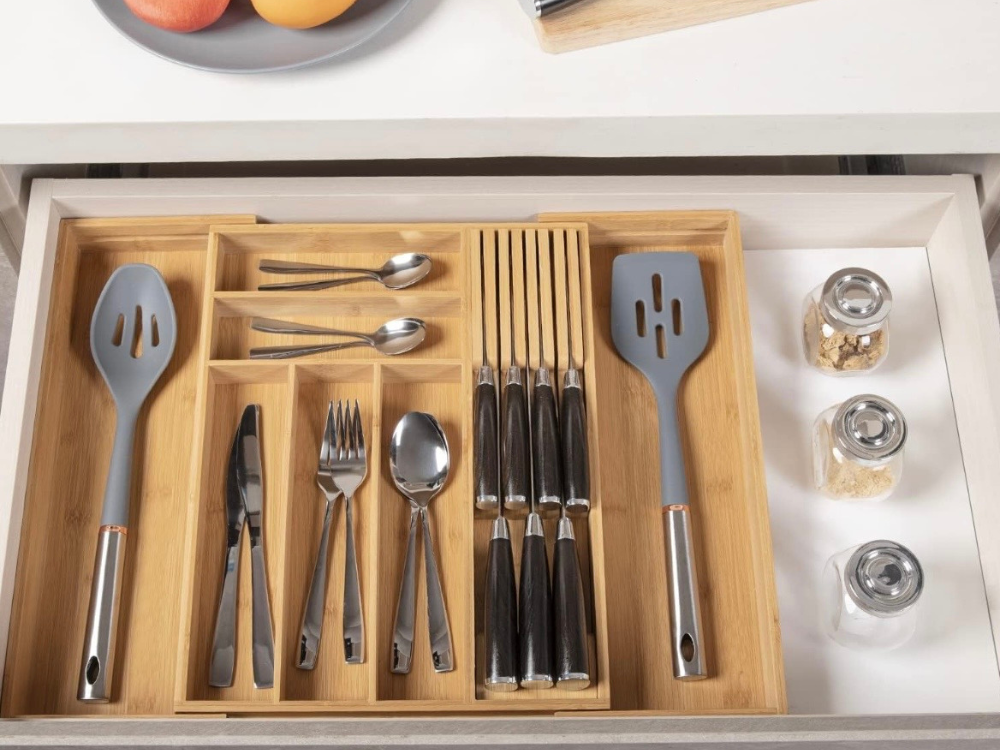
Use dividers to create broad lanes for everyday utensils, measuring tools, wraps, or food-storage pieces after duplicates are removed.
Best forDrawers that jam or require digging.
Check firstMeasure the interior length, width, height, and divider expansion range.
Skip it whenThe drawer is simply over capacity and needs fewer tools, not smaller compartments.
Use Cabinet Doors Carefully
Compatible door racks or hooks may hold lightweight measuring tools, cloths, lids, or cleaning supplies without taking shelf space.
Best forFlat, unused door interiors with enough closing clearance.
Check firstCheck hinges, shelves, handle clearance, weight limits, and renter restrictions.
Skip it whenThe cabinet no longer closes correctly or the added weight stresses the door.
Create a Breakfast or Coffee Station
Keep mugs, coffee, tea, cereal, oatmeal, and other morning essentials near the appliance or counter where the routine happens.
Best forMorning supplies scattered across several cabinets.
Check firstLimit the station to what is used frequently enough to deserve prime access.
Skip it whenIt becomes a display area for every mug, syrup, appliance, and backup bag.
Give Family Snacks One Boundary
Use one reachable shelf, drawer, or bin for the snacks that need fast access while keeping bulk backup inventory elsewhere.
Best forIndividual packages spreading across the pantry.
Check firstChoose a container that fits the actual shelf and does not hide expiration dates.
Skip it whenThe category is so large that one oversized bin becomes difficult to lift or maintain.
Match Food Containers With Lids
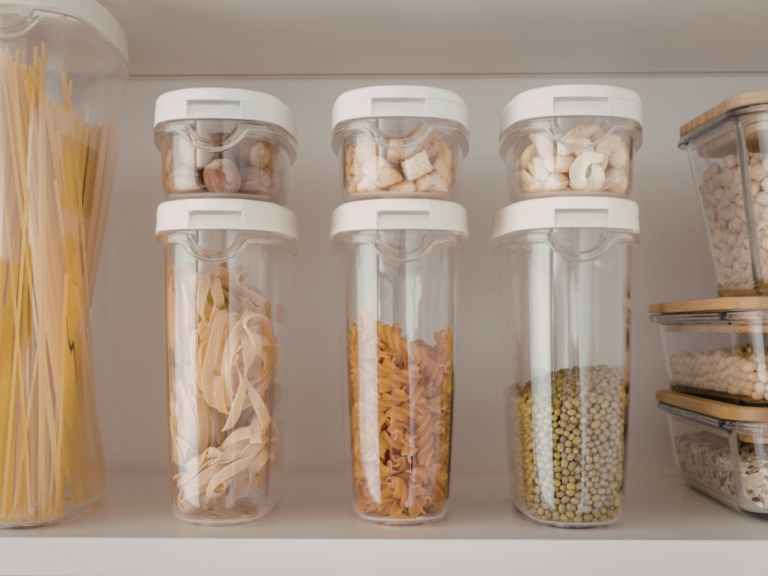
Store only containers with matching lids, nest compatible shapes, and use a small divider or narrow bin for lids if that genuinely speeds cleanup.
Best forCabinets full of mismatched plastic pieces.
Check firstKeep a realistic quantity based on lunch packing, leftovers, and dishwasher timing.
Skip it whenYou are storing more containers than the household can use between wash cycles.
Make Under-Sink Storage Serviceable
Use low, movable organizers around pipes and cleaning supplies while preserving quick access to plumbing and potential leaks.
Best forAwkward under-sink space with mixed bottles and bags.
Check firstMeasure around the pipes, disposal, hinges, and any child-safety hardware.
Skip it whenA permanent stack blocks shutoff valves, leaks, or cleaning access.
Use a Slim Cart Only When the Gap Works
A measured rolling cart can add pantry or appliance storage beside a cabinet or refrigerator when it rolls out easily and does not block ventilation.
Best forA true narrow gap with a clear pull-out path.
Check firstMeasure the narrowest point, baseboards, handles, vents, and full rolling route.
Skip it whenThe cart traps heat, blocks a door, or becomes another crowded open shelf.
Build an Appliance Parking Zone
Group the appliances that genuinely stay out in one defined section and store occasional tools elsewhere.
Best forCountertop appliances spreading across every surface.
Check firstKeep out items used often enough that storing them would reduce use.
Skip it whenThe appliance is bulky, duplicates another tool, or is used only a few times per year.
Use a Short Kitchen Reset
A quick evening reset can return dishes, food, counters, and tomorrow’s essentials to a usable state without opening a deep-cleaning project.
Best forSystems that work initially but unravel during the week.
Check firstReset the highest-impact areas: sink, prep surface, food zones, and floor path.
Skip it whenThe reset becomes an unrealistic checklist that takes longer than the cooking routine.
Featured Multipurpose Appliance
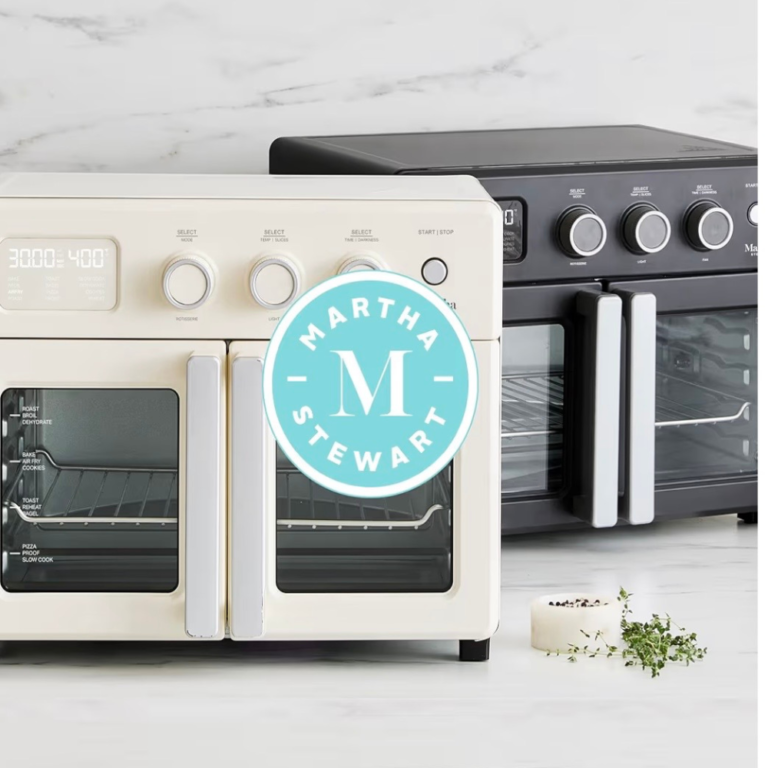
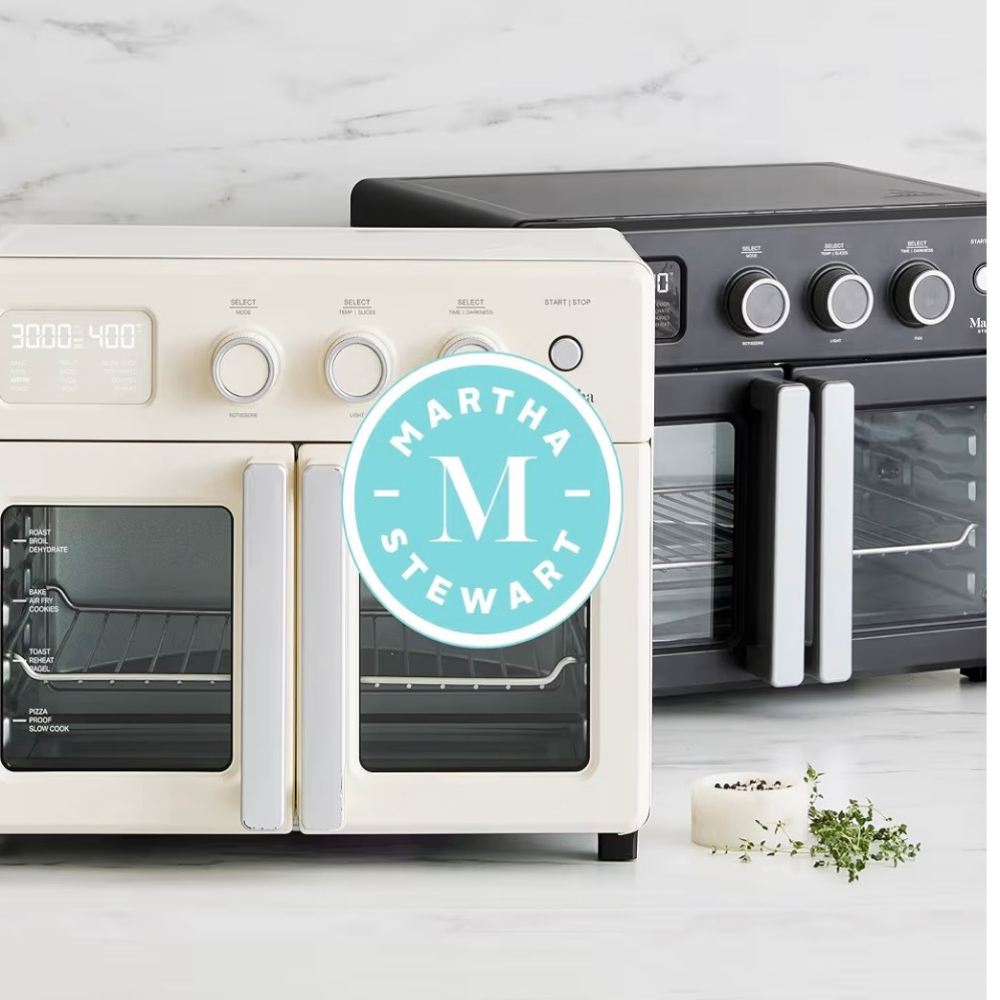
Martha Stewart Programmable Air Fryer Oven
A multipurpose countertop oven can make sense when it replaces a separate toaster oven and basic air fryer that would otherwise compete for space. It does not automatically save space simply because it performs several functions.
Best forSmaller households that regularly air fry, toast, bake, roast, broil, or reheat.
Potential replacementA separate basket air fryer and basic toaster oven.
Check firstCurrent width, depth, height, door swing, cord reach, ventilation clearance, and storage plan.
Skip it whenYou already own the same functions, rarely cook this way, or cannot protect enough prep space.
Fast Decision Guide
Match the organizer to the problem—not the trend
This table helps readers narrow the idea before opening a shopping list.
| Kitchen problem | Idea to try first | Why it may help | Do not start here when… |
|---|---|---|---|
| Counter cannot be used | Protect one prep zone | Restores function without buying storage | Cabinets are full of items that first need editing |
| Empty space above plates or mugs | Measured shelf riser | Adds a second level | Stacks become unstable or inaccessible |
| Small bottles disappear in back | Turntable or shallow pull-out | Brings items into view | Containers are tall, heavy, or irregular |
| Drawer will not open smoothly | Declutter, then divide | Creates broad visible lanes | The drawer remains over capacity |
| Snacks spread through pantry | One family snack boundary | Groups daily items and moves backups elsewhere | The bin hides expiration dates or becomes too heavy |
| Appliances take over counters | Appliance parking zone | Limits the permanent footprint | Most appliances are occasional-use duplicates |
| No pantry cabinet exists | Measured cart or secondary shelf | Adds movable capacity | It blocks doors, ventilation, or walking paths |
| Kitchen quickly becomes messy again | Short evening reset | Restores the highest-impact areas | The routine is too long to repeat consistently |
Before Buying Organizers
Products should improve access—not preserve excess
Decluttering and measuring are part of the buying decision, not separate projects.
Usually worth considering
- Risers where cabinet height is genuinely unused
- Turntables for small bottles hidden on deep shelves
- Dividers after the drawer has been edited
- Front-access bins for categories that must stack
- A measured cart where a safe, ventilated gap exists
- A multipurpose appliance that replaces tools you already own
Usually worth skipping
- Matching bins purchased before measuring
- Counter organizers that consume prep space
- Risers that create tall, unstable piles
- Door storage that prevents cabinets from closing
- Decanting systems that add more maintenance than value
- Single-purpose appliances that duplicate existing tools
Turn Inspiration Into a Plan
Use the free kitchen printable before ordering organizers
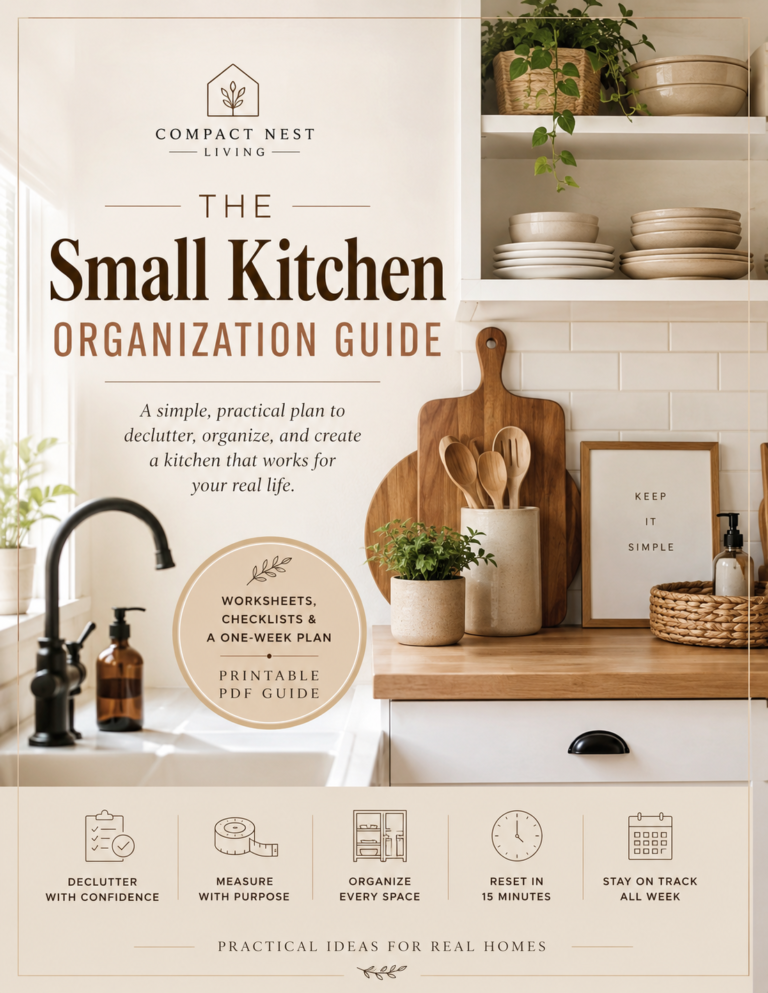
The worksheet companion includes a measurement page, zone planner, decluttering checklist, appliance review, cabinet and drawer checklist, reset routine, and one-week action plan.
Small Kitchen FAQ
Questions readers may ask while choosing an idea
What is the best way to organize a very small kitchen?
Protect one prep surface, group items around repeated tasks, keep daily supplies in prime-access space, and move backups or occasional tools to less convenient storage. Work on one bottleneck at a time.
How do I organize a small kitchen with few cabinets?
First reduce duplicates and occasional-use items. Then evaluate cabinet height, compatible door storage, a measured cart, or secondary storage outside the main cooking zone without blocking ventilation or walking paths.
Are clear pantry bins worth it?
They can help with loose packages and deep shelves when the bin fits the exact category and shelf. They waste space when they are oversized, hide dates, or create another container that must be emptied and cleaned.
Which small appliances should stay on the counter?
Keep out appliances used often enough that storing them would noticeably reduce use. Compare the footprint with the amount of prep space the appliance removes and whether it replaces another tool.
How do I keep the kitchen organized after the makeover?
Use broad zones, leave breathing room, reduce lids and stacks, and reset the sink, main counter, food zones, and floor path in a short routine that can be repeated on busy days.
Make the Kitchen Work Harder, Not Feel Fuller
Choose one idea, test it, and let the room tell you what it needs next
Small-kitchen organization is less about filling empty space and more about reducing movement, protecting prep space, and making the items used every day easier to reach and return.
Continue the Kitchen Cluster
Move from inspiration to the right next step
These links keep readers moving through Compact Nest Living before they leave for a retailer.