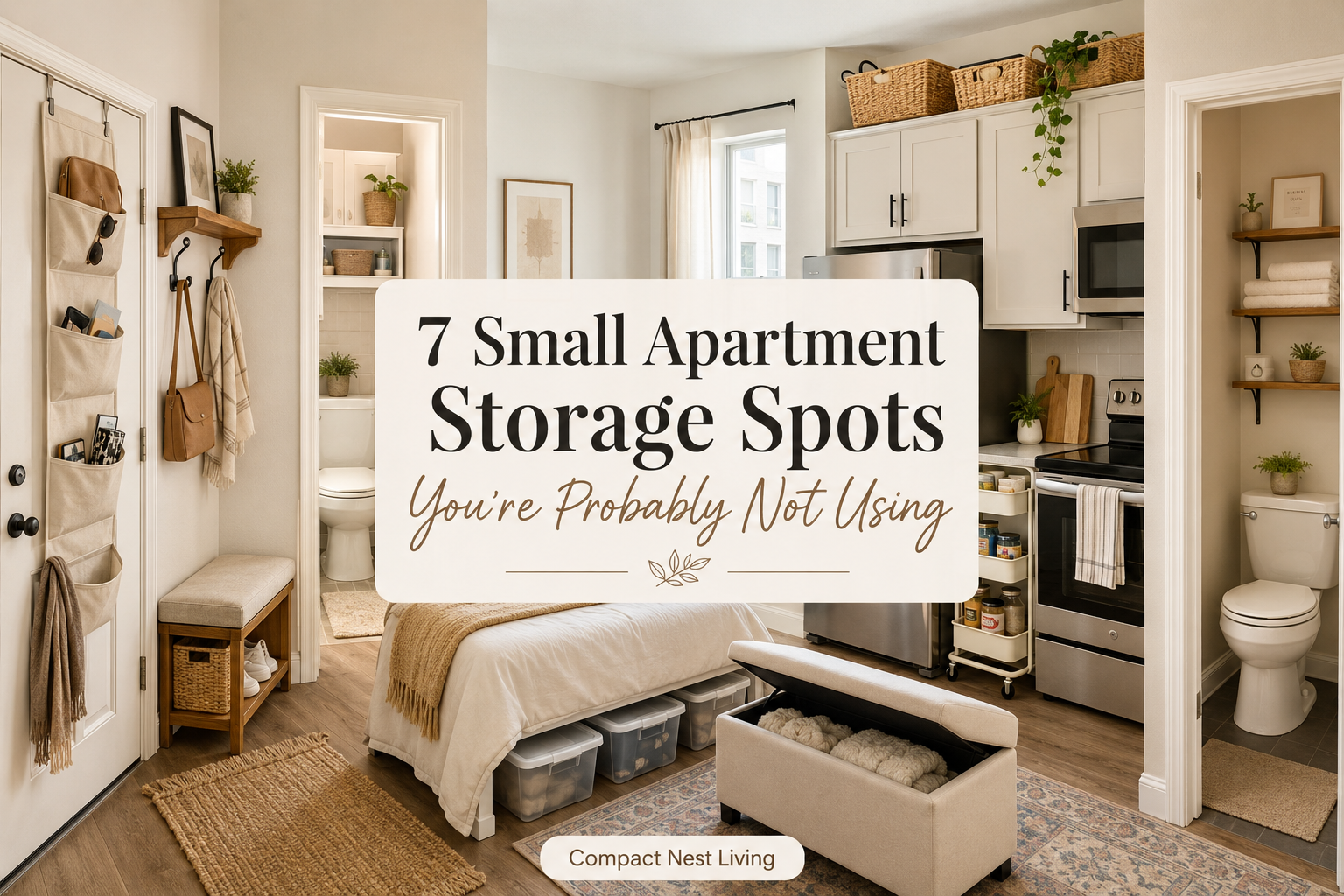
7 Small Apartment Storage Spots You’re Probably Not Using
Before you buy another bulky organizer, check the storage space already hiding above, below, behind, and between the things you own. These realistic ideas help renters make a small apartment feel more organized without crowding every open corner.
Small apartments have a funny way of making everyday things feel like they are multiplying. Shoes gather near the door, extra blankets take over the sofa, and the one kitchen cabinet you actually need becomes home to six things you rarely use.
The answer is not always another cabinet, cart, or basket. A better first step is to scan the apartment for overlooked areas that can hold the things you already own. The goal is to create useful storage—not to fill every empty inch just because it exists.
Measure before you shop. Check the full height, width, depth, trim, baseboards, and opening clearance—not just the most obvious measurement.
Use my small-apartment measuring guide before ordering a shelf, cart, bin, or storage table that needs to fit into a tight spot.
1. The Space Above Your Doors
The wall space above a doorway is easy to ignore, but it can hold a simple floating shelf for lightweight items you want nearby without needing to access every day.
Use this area for extra towels, small baskets, seasonal accessories, books, or decorative storage boxes. Keeping the containers similar in color will make the shelf feel intentional instead of cluttered.
Best for renters: Use this idea only when your lease allows small wall anchors or you have written permission. Keep the shelf narrow and plan to patch the holes properly before moving.
Skip this when: The shelf would sit above a child’s play area, a frequently slammed door, or a walkway where a falling item could cause an injury.
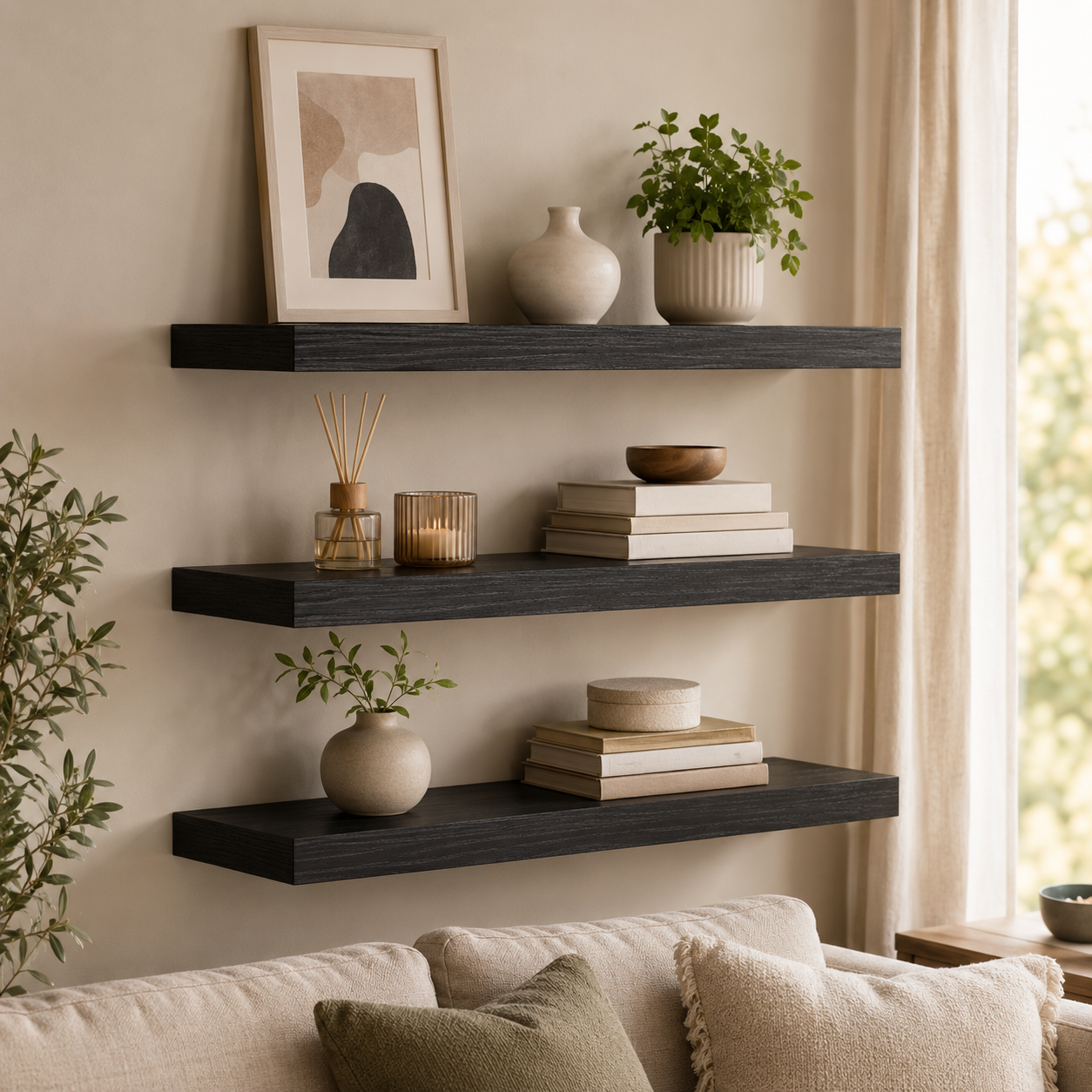
Simple Floating Shelf
A narrow floating shelf can turn unused wall space into storage without taking up any floor space.
View Storage Option2. The Back of Interior Doors
Bedroom, bathroom, laundry, pantry, and closet doors can all become useful storage zones. Over-the-door organizers work well for shoes, cleaning supplies, toiletries, accessories, gift wrap, or toddler essentials.
Choose an organizer based on what you actually need to store. Clear pockets are helpful for small items, while baskets and simple hooks look cleaner when the organizer is visible from the room.
Best for renters: Choose a no-drill over-the-door style and place thin felt pads under the hooks so they are less likely to scrape the paint or rattle every time the door moves.
Skip this when: The hooks prevent the door from closing smoothly, rub against the frame, or make a lightweight hollow-core door feel overloaded.
3. Under the Bed
Under-bed storage is not just for off-season clothing. It can also hold extra bedding, shoes, wrapping supplies, keepsakes, handbags, and items you do not use every week.
Low-profile containers with handles or wheels are easier to pull out than loose bags. Measure from the floor to the lowest part of the bed frame before ordering so the bins do not become one more thing you have to return.
Best for renters: This is one of the easiest zero-installation storage upgrades. Lidded bins add capacity without changing the walls, doors, or permanent fixtures.
Skip this when: The area is damp, difficult to clean, prone to pests, or so low that you would have to force the containers underneath.
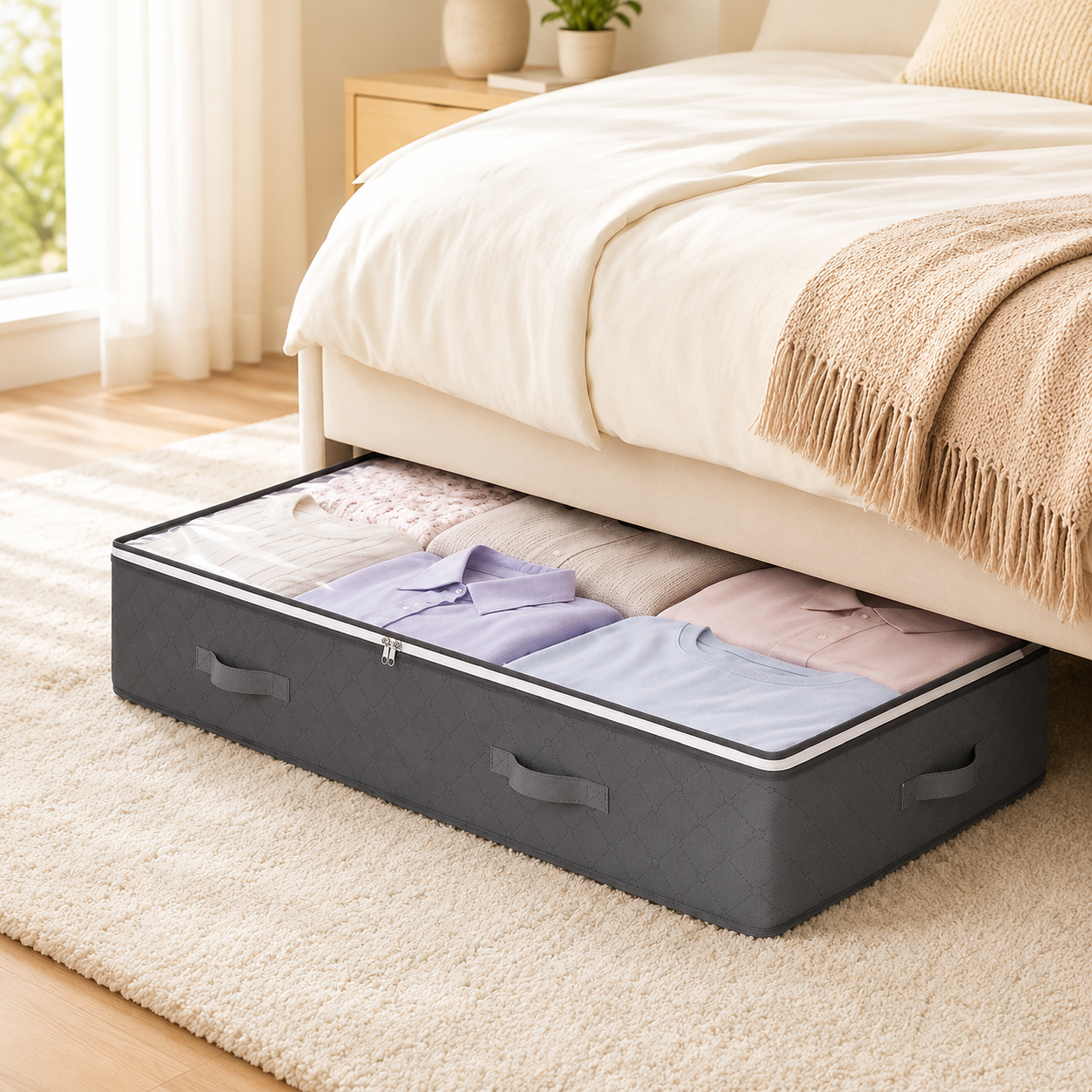
Low-Profile Under-Bed Bins
Choose containers with lids to keep dust out and handles that make them easier to slide forward.
See the Storage Bins4. Above Kitchen and Bathroom Cabinets
The space above cabinets can hold lightweight items that are used occasionally, including serving pieces, extra paper products, guest towels, or backup toiletries.
Instead of lining up loose items across the top, group them inside matching baskets or lidded boxes. This keeps the area from looking like a shelf of random leftovers and makes it easier to remove everything for cleaning.
Best for renters: Use lightweight, handled baskets that sit directly on top of the cabinet. They add storage without drilling or attaching anything to the rental.
Skip this when: The area is above a stove, collects heavy grease, traps shower moisture, or is too high for you to reach safely with a stable step stool.
5. Inside Cabinet Doors
The inside of a cabinet door can hold more than you might expect. Adhesive bins, slim racks, hooks, and magnetic organizers can store small tools without using valuable shelf or counter space.
In the bathroom, use this area for cleaning cloths, hair accessories, or small backup items. In the kitchen, it can hold measuring spoons, pot lids, cutting boards, or small packets. Always confirm that the organizer is shallow enough for the door to close without hitting the shelves inside.
Best for renters: Use removable adhesive products rated for the cabinet material, clean the surface first, and test one hidden spot before installing the full organizer.
Skip this when: The cabinet has delicate paint, peeling laminate, very little internal clearance, or a finish that could lift when adhesive is removed.
6. The Area Behind the Sofa
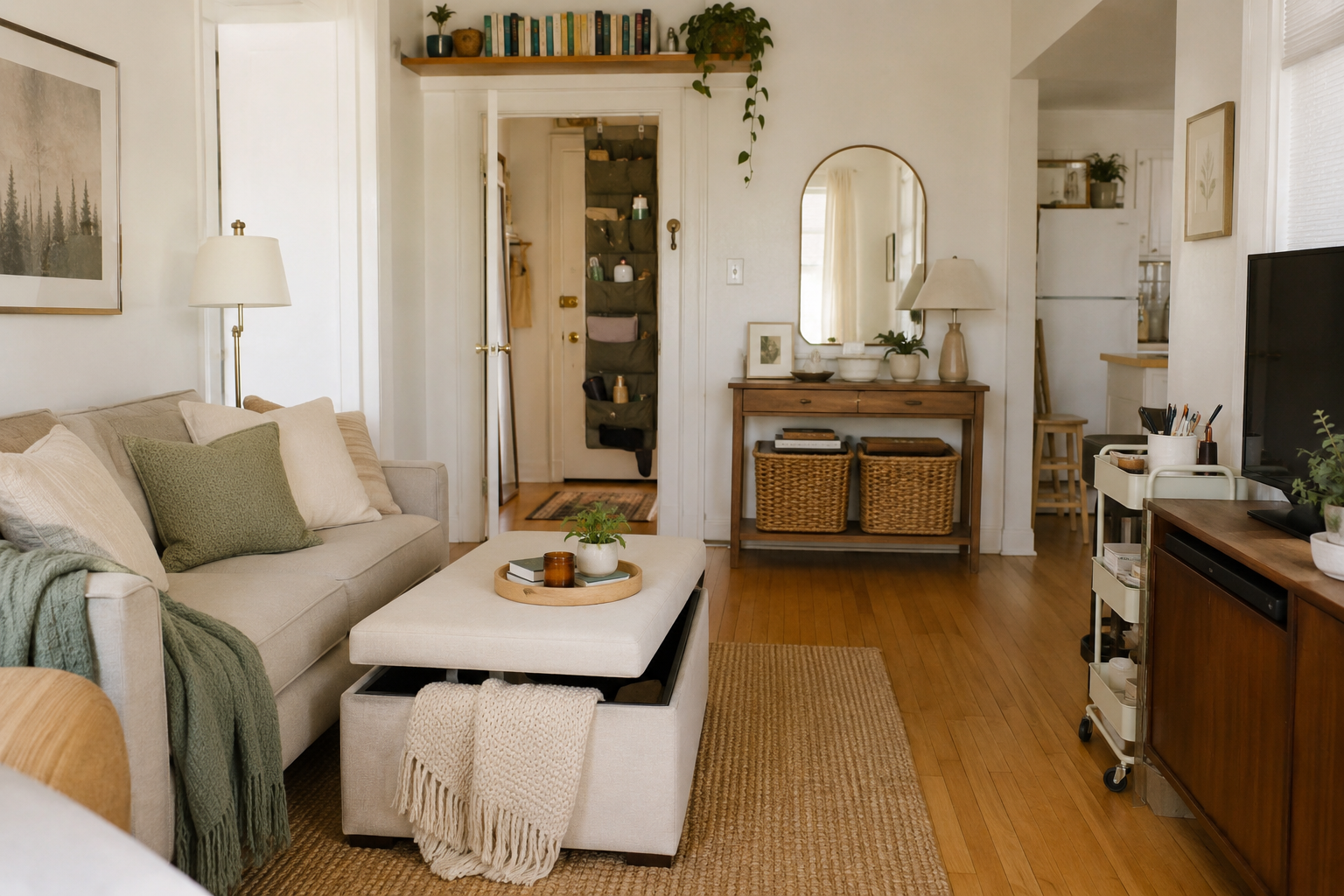
If your sofa sits a few inches away from the wall, that narrow space may be useful. A slim console table can hold a lamp, charging station, books, baskets, or drinks while helping the room feel more finished.
A behind-the-sofa table is especially helpful when there is not enough room for traditional side tables. Some styles also include outlets or USB ports, which can reduce cord clutter around the living room.
Best for renters: A freestanding console adds surface space and storage without wall mounting. Choose a lightweight style that will be easy to move when your layout changes.
Skip this when: Pulling the sofa forward would narrow an important walkway, block a floor vent, pinch electrical cords, or make the room feel visibly more crowded.
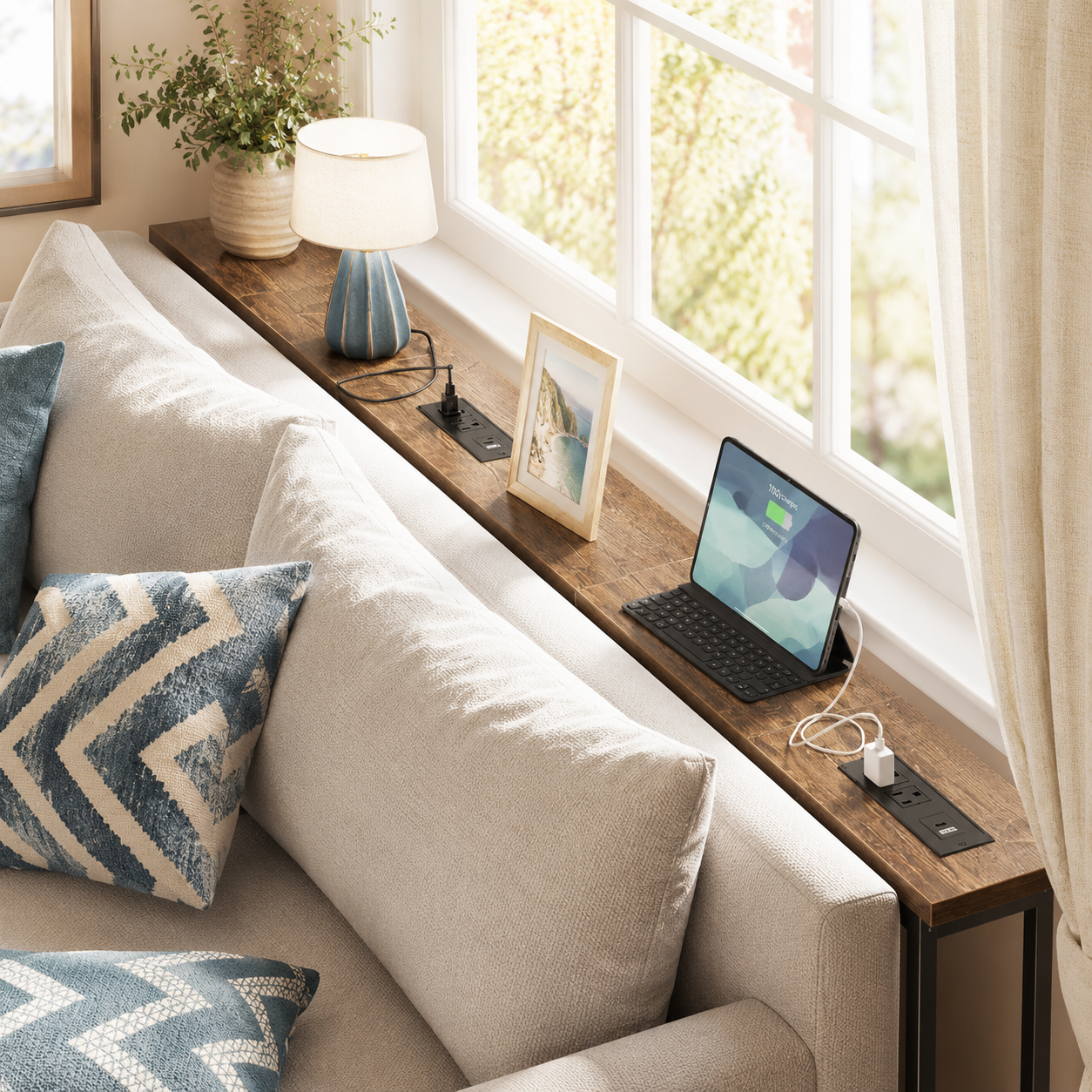
Slim Sofa Console Table
This type of narrow table adds a usable surface without requiring much room between the sofa and wall.
View Slim Console Tables7. Narrow Gaps Beside Furniture and Appliances
The gap beside a refrigerator, bathroom vanity, washing machine, desk, or dresser can sometimes fit a slim rolling cart.
These carts are useful for pantry goods, laundry supplies, toiletries, craft materials, office items, and cleaning products. Because the cart rolls out, you can see and reach everything without digging through a deep cabinet.
Best for renters: A freestanding rolling cart is removable, flexible, and easy to repurpose in another room. Measure around baseboards rather than measuring only from wall to appliance.
Skip this when: The cart would block appliance ventilation, a water shutoff, an outlet, a cabinet door, or the space needed to pull an appliance out safely.
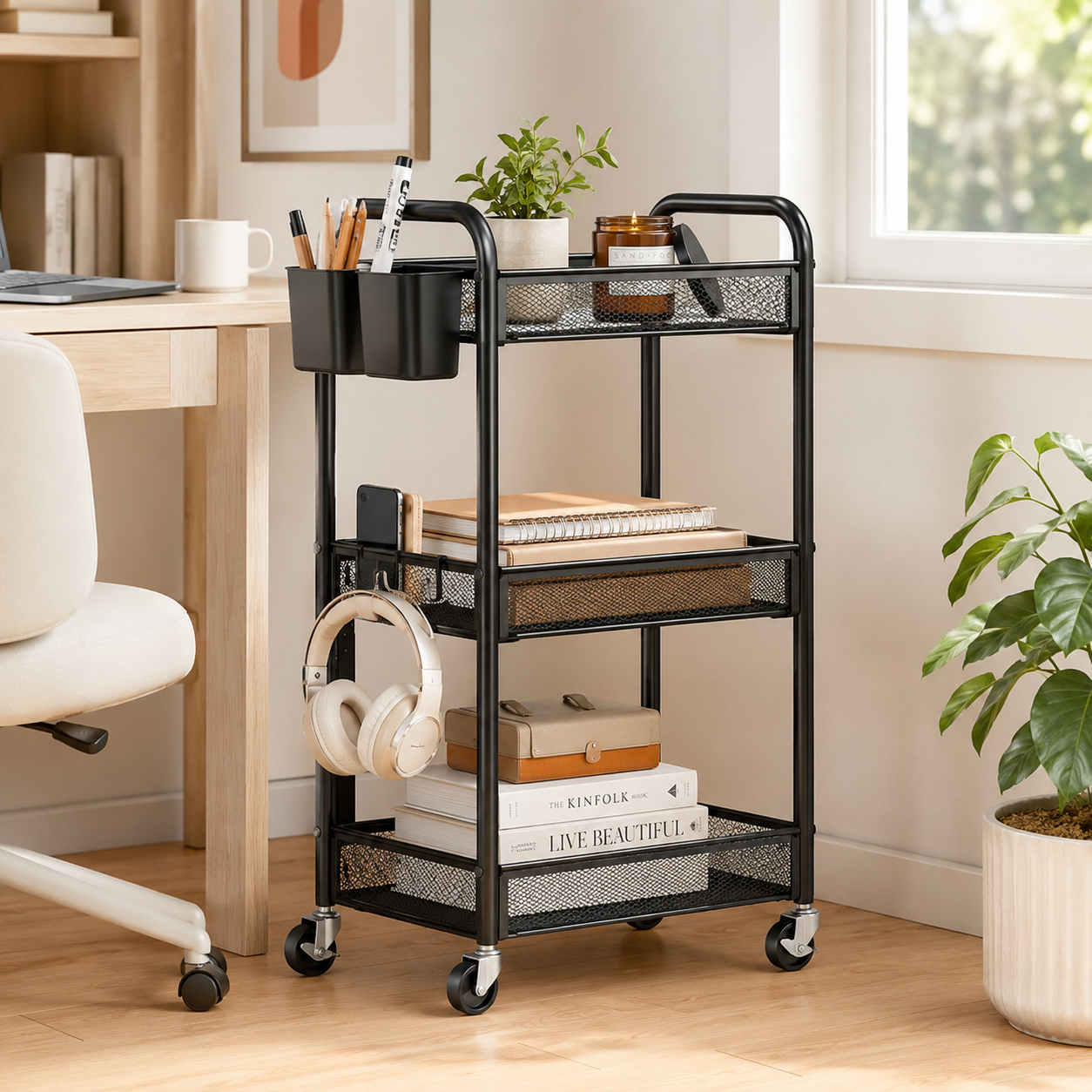
Slim Rolling Storage Cart
A narrow cart can transform an awkward gap into storage while keeping everything easy to access.
Shop Slim Storage CartsSmall-Apartment Storage Checklist
- Choose one clutter problem to solve before shopping.
- Measure the full height, width, and depth of the available space.
- Include baseboards, trim, hinges, handles, and door clearance.
- Decide exactly what will be stored there.
- Check the product’s weight limit and installation requirements.
- Keep frequently used items within easy reach.
- Use lidded storage for dusty or rarely accessed areas.
- Avoid blocking vents, outlets, walkways, or appliance access.
- Choose similar colors or materials in visible areas to reduce visual clutter.
- Leave some open space instead of filling every available corner.
Printable version coming later: This checklist is already formatted as the foundation for a one-page small-space storage printable. For now, bookmark this post before your next apartment reset.
Keep Organizing, Room by Room
Use this article as your starting point, then head to the room that causes the most clutter in your home.
Make the Storage You Already Have Work Harder
Creating more storage in a small apartment does not always mean adding another large piece of furniture. The most useful solution may be a shelf above a doorway, a bin beneath the bed, or a narrow cart tucked into a gap you previously ignored.
Start with one area that regularly collects clutter. Give that area a clear purpose, measure carefully, and choose a solution that makes the space easier to maintain. That approach will do more for your home than buying a matching container for every open shelf.
For product-specific ideas, visit my 10 space-saving products guide. For broader systems and realistic reset ideas, browse the Organization hub.
Ready to Make Your Small Space Easier to Live In?
Explore practical storage ideas, clutter-control routines, and renter-friendly solutions for creating a home that feels calmer without chasing perfection.
Explore the Organization Hub