15 Cozy Reading Nook Ideas for Small Spaces
Find the Reading Nook That Fits Your Space
Explore 15 realistic reading nook ideas for apartments and small rooms, with approximate space needs, best-for notes, honest limitations, and small-space product picks that earn their spot.
Browse the 15 IdeasInspiration First—Then Build the Version That Fits Your Home
This article is your visual idea bank. Use it to compare bedroom corners, window areas, floor cushions, compact chairs, storage benches, daybeds, and kid-friendly setups before deciding what belongs in your home.
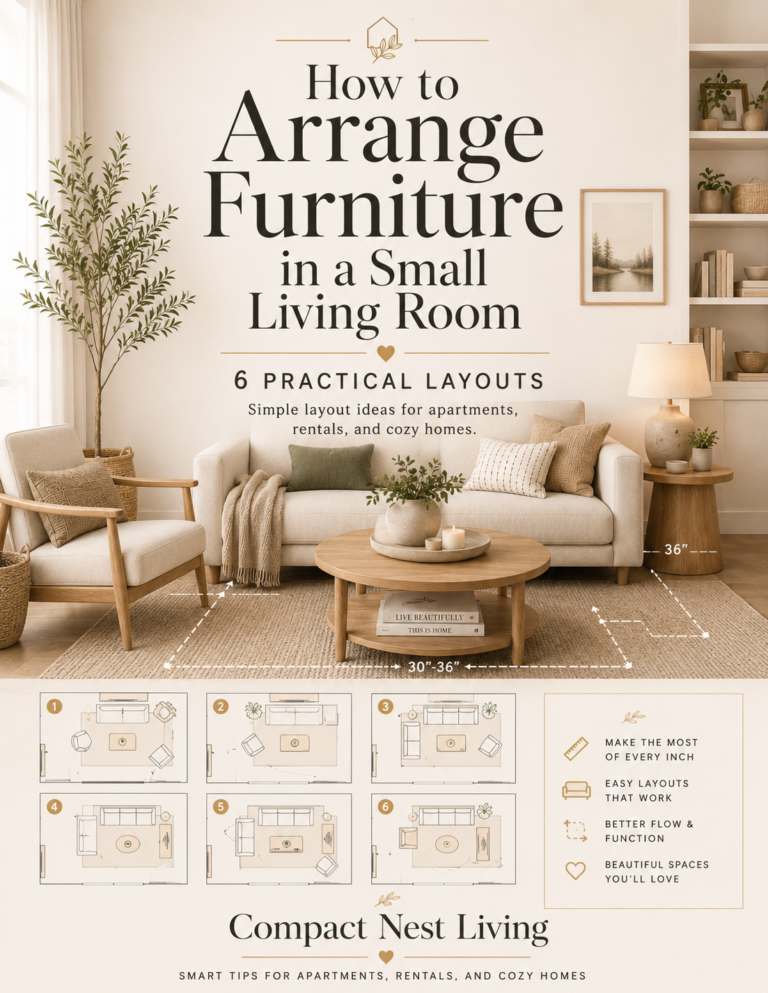
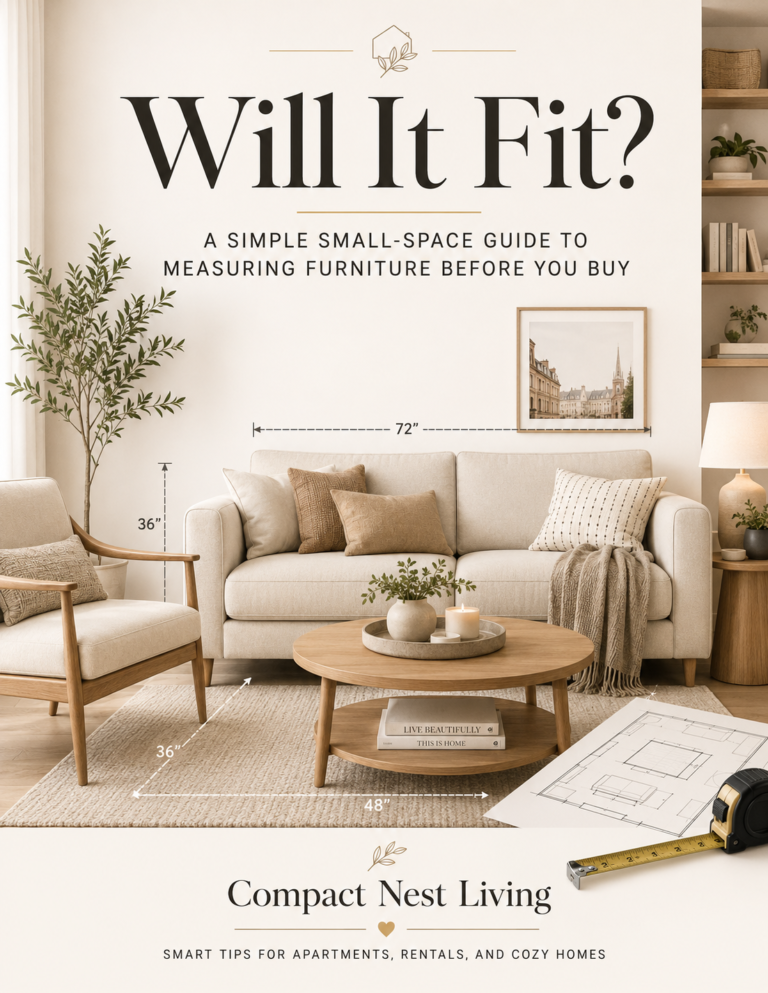
Need the step-by-step setup order instead? Start with how to create a cozy reading nook in a small apartment . Before ordering a chair, bench, daybed, or bookcase, use my furniture measuring guide to check the footprint, walkway, doorway, and delivery route.
The goal is not to fill an empty corner with more stuff. It is to create one useful place to sit, read, and reset—without blocking daily life.
What Do You Need Help With?
Build a Nook Step by Step
Choose the location, measure the corner, plan the lighting, and add pieces in the right order.
Read the setup guide →Measure Before You Order
Check the chair footprint, walking path, doorway, hallway, and shipping-box dimensions first.
Use the measuring guide →Quick Reading-Nook Seating Comparison
These are approximate planning ranges—not product specifications. Always compare the exact listing measurements with your taped-out floor space.
| Seating type | Approx. footprint | Best for | Budget | Skip it when… |
|---|---|---|---|---|
| Floor cushion | 24–36 in. square | Flexible or very tight spaces | $ | Getting down to or up from the floor is uncomfortable |
| Slipper chair | 24–30 in. W × 28–34 in. D | Narrow bedroom or living-room corners | $$ | You need arm support or a deeper lounge seat |
| Compact accent chair | 28–34 in. W × 30–36 in. D | Everyday adult reading comfort | $$ | The chair would pinch the main walkway |
| Storage bench | 36–48 in. W × 15–20 in. D | Window walls and dual-purpose seating | $$–$$$ | You cannot confirm the seat’s weight capacity or window clearance |
| Daybed | 75–80 in. W × 38–42 in. D | Office, studio, or guest-room flexibility | $$$ | The room cannot comfortably spare a twin-bed footprint |
Unsure whether a piece will fit? Mark the footprint with painter’s tape before ordering.
Turn an Empty Bedroom Corner Into a Reading Retreat
A bedroom corner is perfect when you want a quiet place to read before bed without taking over the entire room. Choose a compact chair with a rounded shape, then add a small table and a soft lamp.
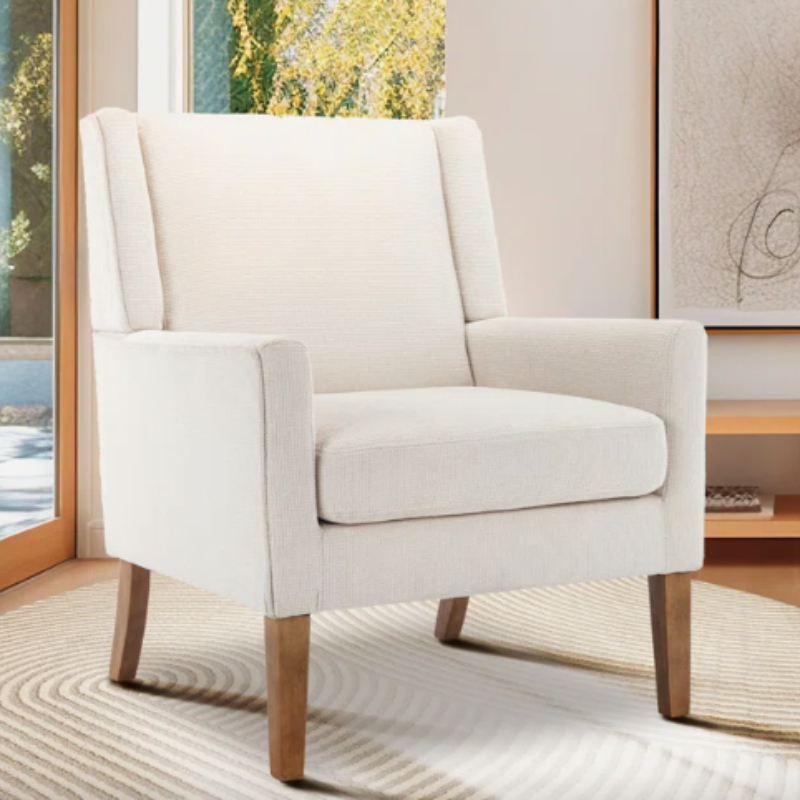
Compact Upholstered Accent Chair
Look for a chair with a smaller footprint, supportive back, and enough cushion to make “one more chapter” feel like a reasonable life choice.
Check chair width, depth, seat height, and delivery dimensions before ordering.
Measure the chair’s full width and depth, then test the path around the bed and closet.
Skip this setup when the chair would narrow the route you use to get dressed, make the bed, or reach storage.
Build a Light-Filled Nook Beside a Window
Natural light automatically makes a reading corner feel calmer. Add a chair or bench near the window, but leave enough room to open curtains and move through the space comfortably.
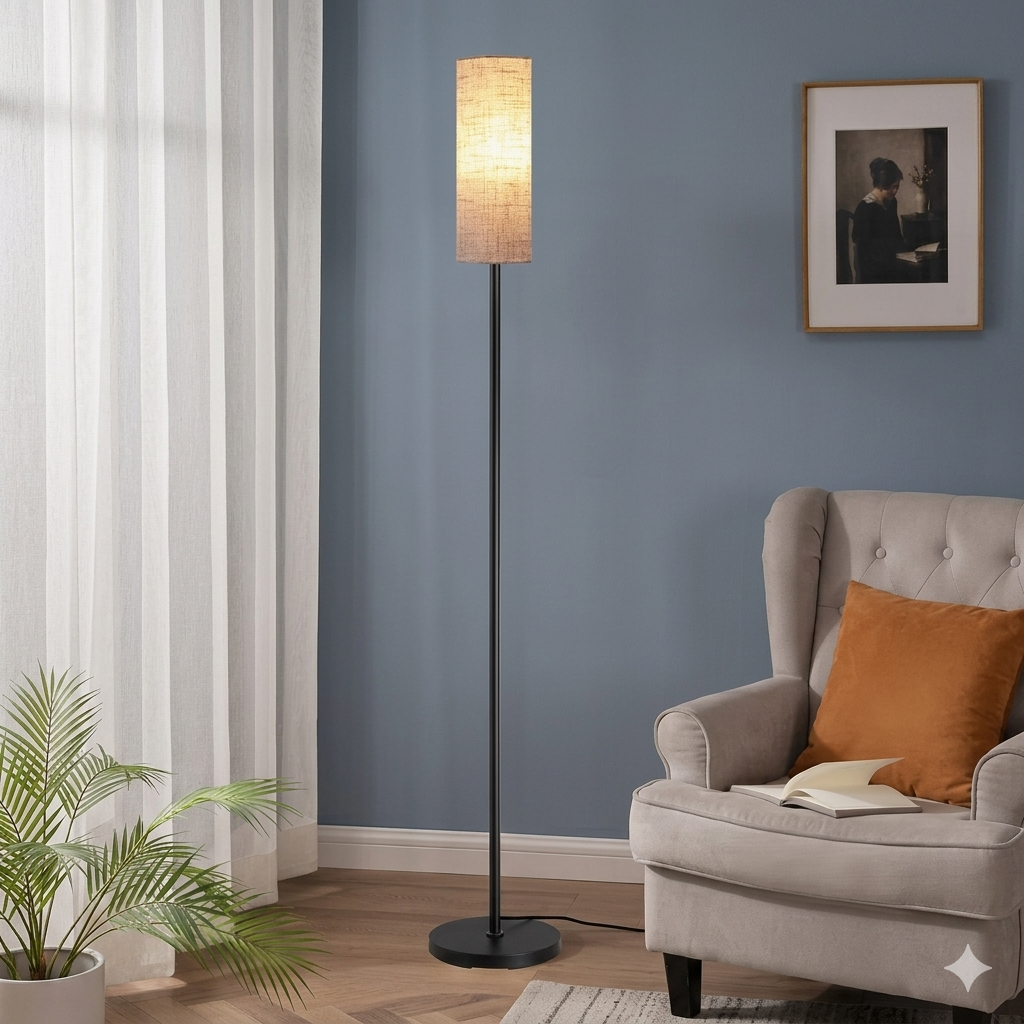
Slim Floor Lamp With Warm Light
The window handles daytime reading. A slender floor lamp keeps the nook usable after sunset without requiring room for a bulky nightstand.
Check lamp height, cord length, bulb type, and whether the shade directs light onto the page.
Check glare, afternoon heat, outlet placement, curtain movement, and the direction the window opens.
Skip it when the chair would block a radiator, HVAC vent, patio access, or the only way to open and clean the window.
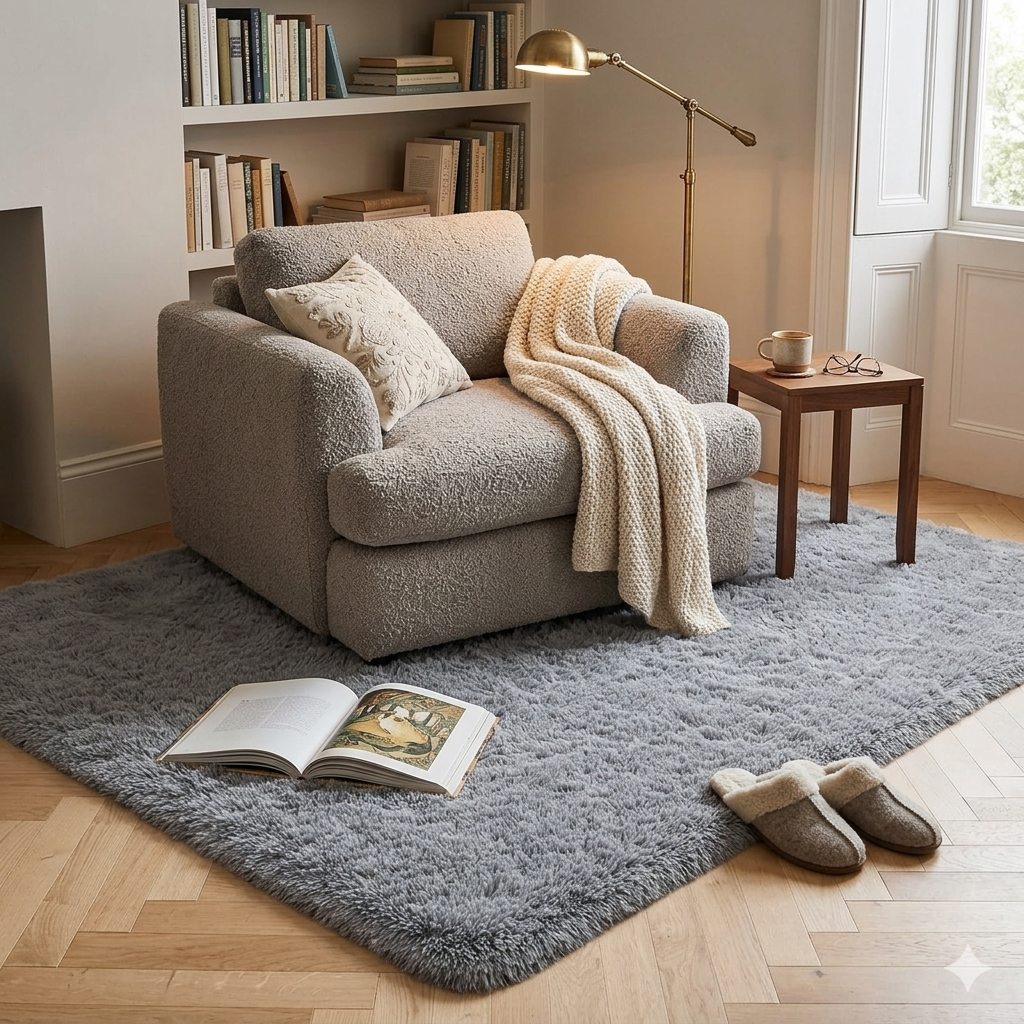
Make a Bouclé Chair the Main Character
A soft bouclé chair can make even the simplest corner look polished. Keep the surrounding pieces light and minimal so the texture stands out without making the space feel busy.
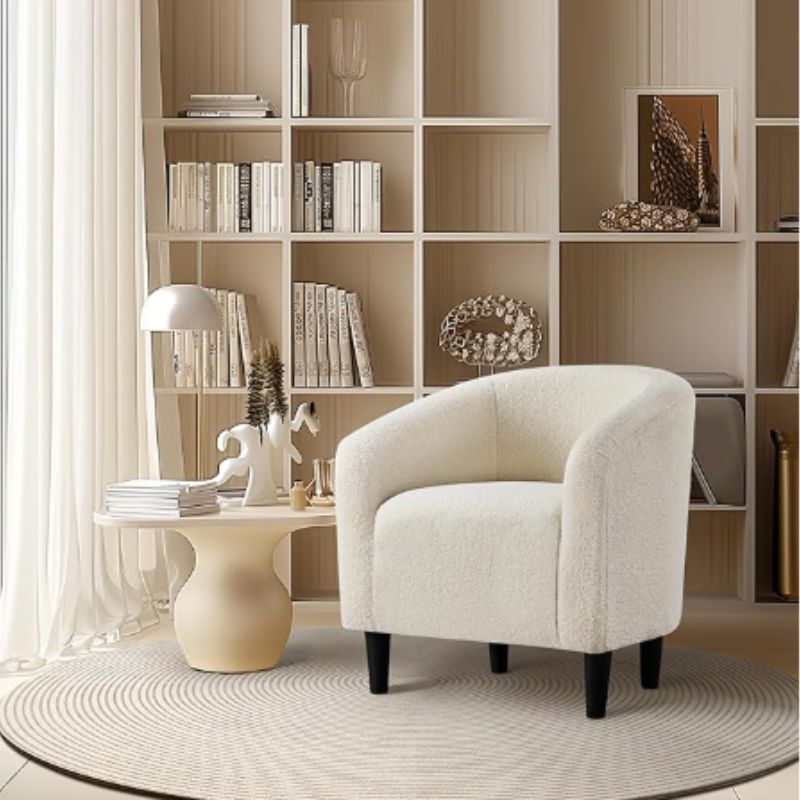
Small Bouclé Reading Chair
This is the piece for anyone who wants the nook to feel fluffy, elevated, and just a little bit fancy without looking overly formal.
Compare upholstery care, seat depth, weight capacity, and return details.
Check the seat depth and back support—not just the fabric. A pretty chair still needs to feel good after twenty minutes.
Skip bouclé when frequent spills, pets, or sticky toddler hands would make the texture harder to maintain than you want.
Ideas 1–3: The Classic Chair Nook
Start with the seat. Add lighting second. Only then decide whether you need a side table or soft layer.
Use an existing chair + move over a lamp
Compact chair + slim floor lamp
Statement chair + petite table + focused light
Create a Floor Cushion Nook With Almost No Furniture
No room for another chair? A supportive floor cushion, small rug, and wall-mounted light can create a relaxed nook without using much visual or physical space.
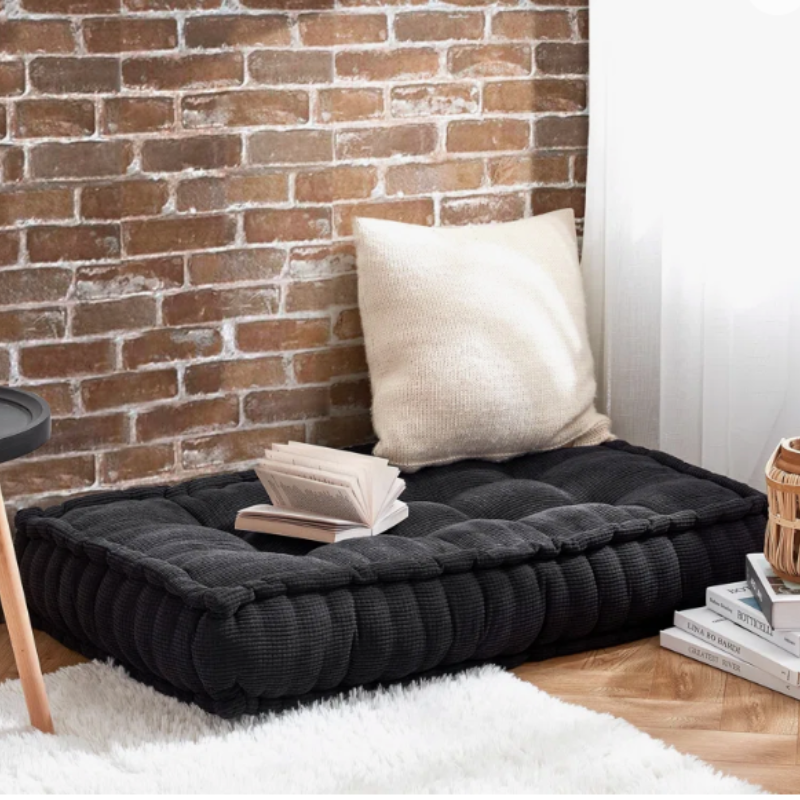
Oversized Floor Pillow or Meditation Cushion
Choose something thick enough to feel intentional—not like you simply gave up and sat on a decorative pillow.
Look for a removable cover, supportive fill, and dimensions large enough for comfortable sitting.
Test the cushion on your actual flooring and make sure you can sit down and stand up comfortably.
Skip floor seating when mobility, back, knee, or hip comfort makes a raised seat the better choice.
Carve Out a Reading Zone in the Living Room
Your reading nook does not have to be completely separate. Use a small rug to visually define one corner of the living room and make it feel like its own tiny zone.
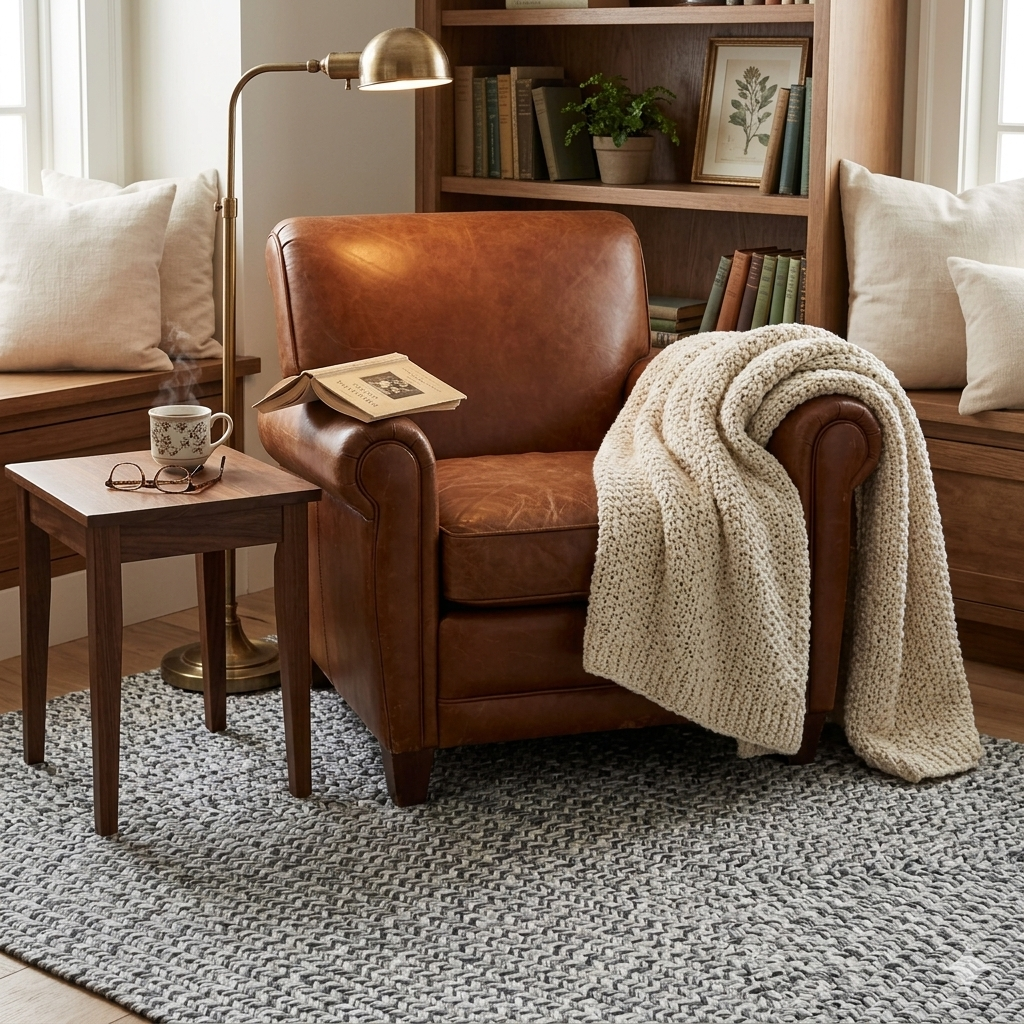
Small Washable Accent Rug
A 3-by-5-foot rug is often enough to anchor a chair and side table without overwhelming a compact living room.
Confirm the rug size with painter’s tape and choose a low-profile pad when needed.
Place the chair first, protect the main walkway, then size the rug around the usable footprint.
Skip the extra rug when it creates a trip edge, fights with the main area rug, or makes the room feel chopped into too many zones.
Let a Narrow Bookshelf Frame the Space
A slim bookcase placed beside your chair adds storage while making the nook feel established. Style it with books, one small basket, and a few decorative objects—without filling every single inch.
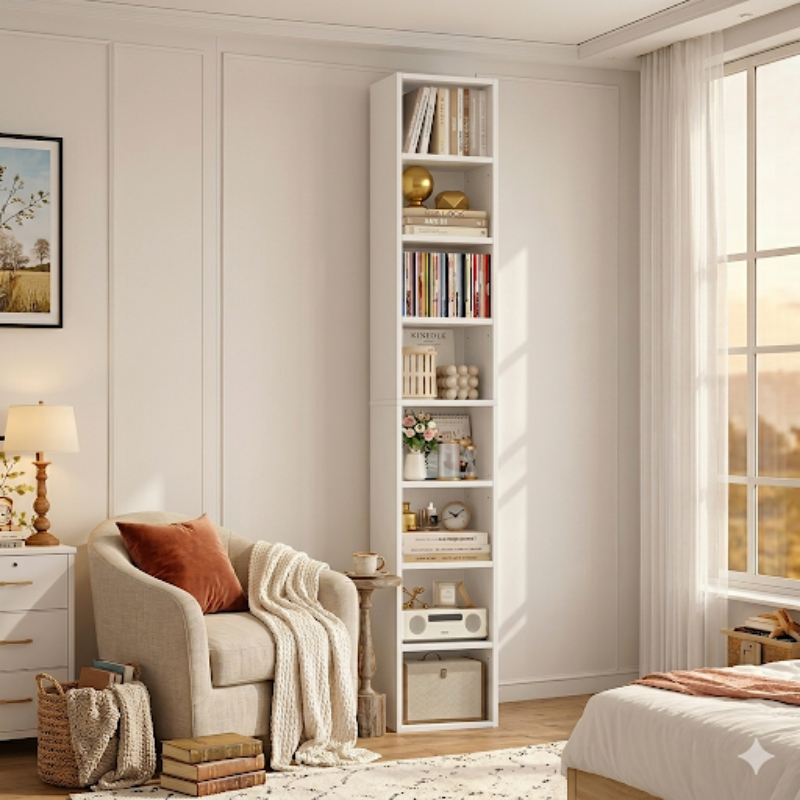
Narrow Vertical Bookcase
Going upward instead of outward gives you room for books without sacrificing a huge section of your floor.
Check overall height, shelf depth, anti-tip hardware, and assembly requirements.
Check shelf depth, baseboards, outlets, door swing, and the hardware required to secure the bookcase.
Skip a tall shelf when it cannot be safely stabilized, crowds the chair, or puts heavy items above the seating area.
Ideas 4–6: The Flexible Small-Space Nook
Choose pieces that move easily or use vertical space so the corner can change with your routine.
Floor cushion + current lamp
Slipper chair + small washable rug
Compact chair + narrow secured bookcase
Use a Slipper Chair in a Seriously Small Corner
Slipper chairs typically have no arms, which helps them slide into narrow spaces where a traditional armchair would feel too bulky.
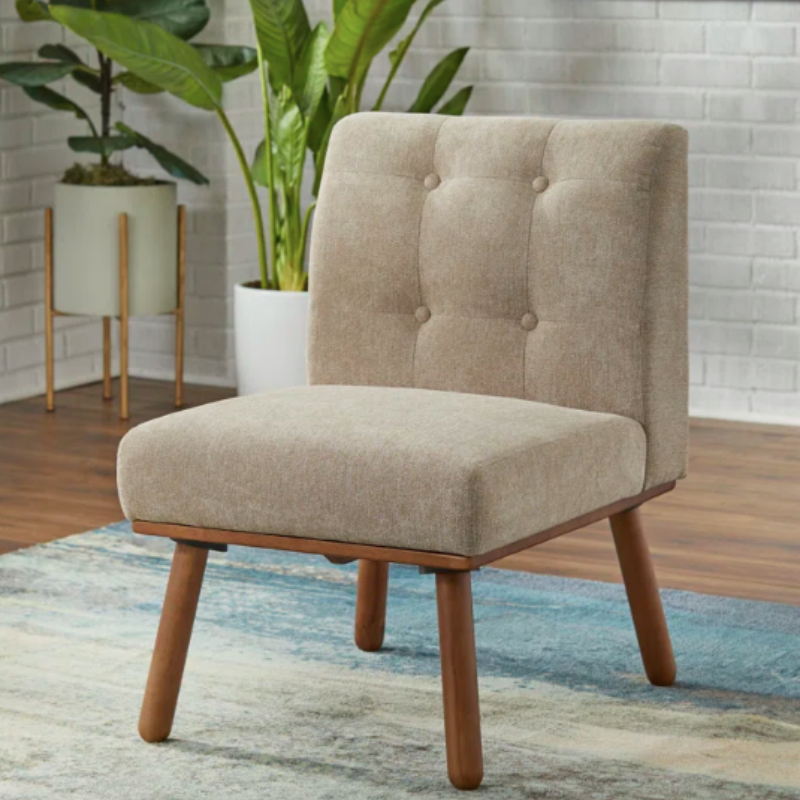
Armless Tufted Slipper Chair
This is one of my favorite solutions for adding extra seating without making the room feel boxed in.
Compare seat width, seat height, cushion firmness, and back angle.
Sit in an armless chair before buying when possible. The open sides save space, but they also change how supported the seat feels.
Skip a slipper chair when you rely on arms to sit down, stand up, or stay comfortable while reading.
Use a Daybed as a Reading Nook and Guest Bed
When every piece of furniture needs to earn its keep, a daybed can function as a lounge spot, reading nook, and overnight guest bed.
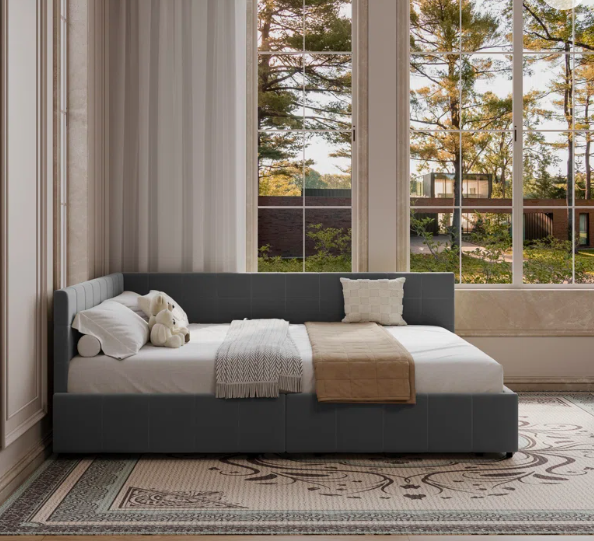
Compact Daybed With Storage
Add two or three large pillows against the back and it instantly feels more like a cozy sofa than a spare bed.
Check frame, mattress, storage, and packaged dimensions separately.
Measure the full delivery route, mattress size, frame depth, drawer clearance, and space needed to make the bed.
Skip the daybed when the room cannot spare a twin-bed footprint without losing its main function.
Create a Cozy Reading Corner for Kids
A child-sized nook can encourage little ones to reach for books while also giving all those board books a home that is not the middle of your floor.
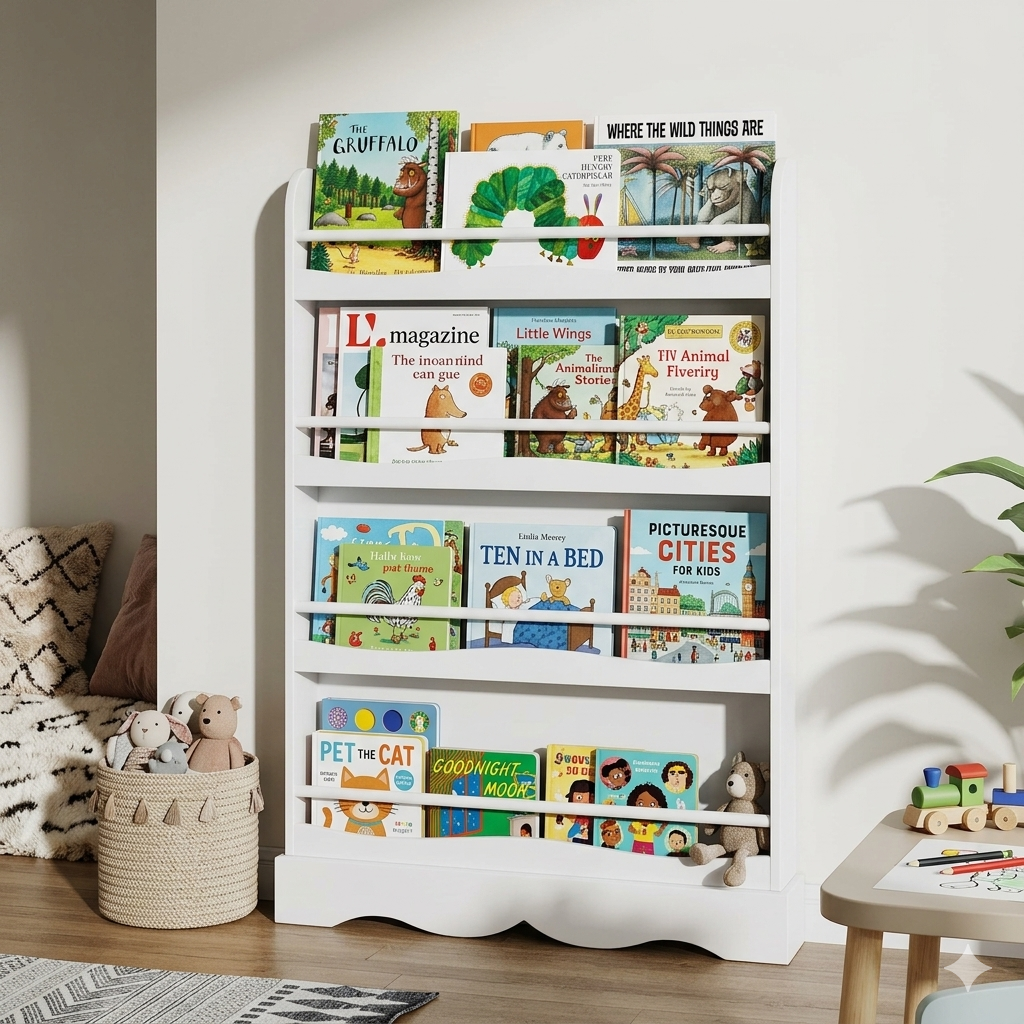
Front-Facing Book Display
Front-facing shelves let children see the book covers, which makes the whole setup feel more inviting than a tightly packed traditional shelf.
Check stability, rounded edges, height, anti-tip guidance, and age recommendations.
Keep books low, cords out of reach, and the setup away from windows, unstable lamps, and heavy objects that can fall.
Skip decorative pieces that reduce supervision, create climbing opportunities, or make the books harder for your child to reach safely.
Ideas 7–9: The Practical Family Nook
Prioritize support, reachable books, clear walkways, and furniture stability before decorative extras.
Existing chair + front-facing book basket
Slipper chair + low book display
Supportive chair + secure display + focused light
Fake a Window Seat With a Storage Bench
No built-in window seat? No problem. A freestanding storage bench placed beneath a window can create a similar look without construction or a dramatic call to your landlord.
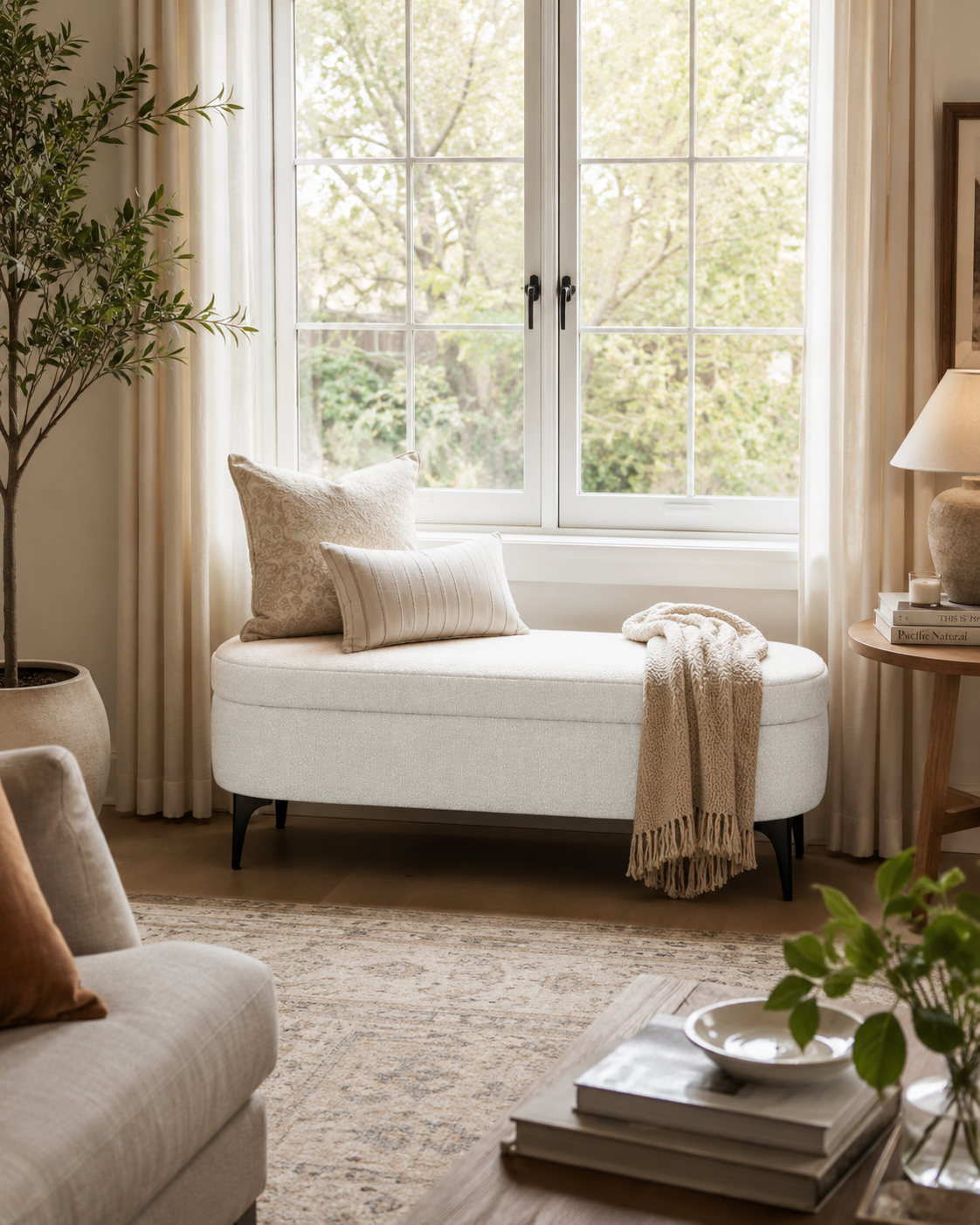
Upholstered Storage Bench
Add one long lumbar pillow and a folded throw for an easy window-seat look that also hides extra blankets or books.
Check seat height, weight capacity, storage opening, and window-sill clearance.
Confirm the bench depth, weight capacity, lid or drawer clearance, and access to the window and curtains.
Skip it when the bench blocks an HVAC vent, radiator, outlet, window latch, or a required exit path.
Give Your Reading Nook a Moody, Library-Like Feel
A deep wall color, dark wood, or rich brown chair can make a small nook feel enveloping instead of cramped. The key is adding enough warm light to keep it cozy.
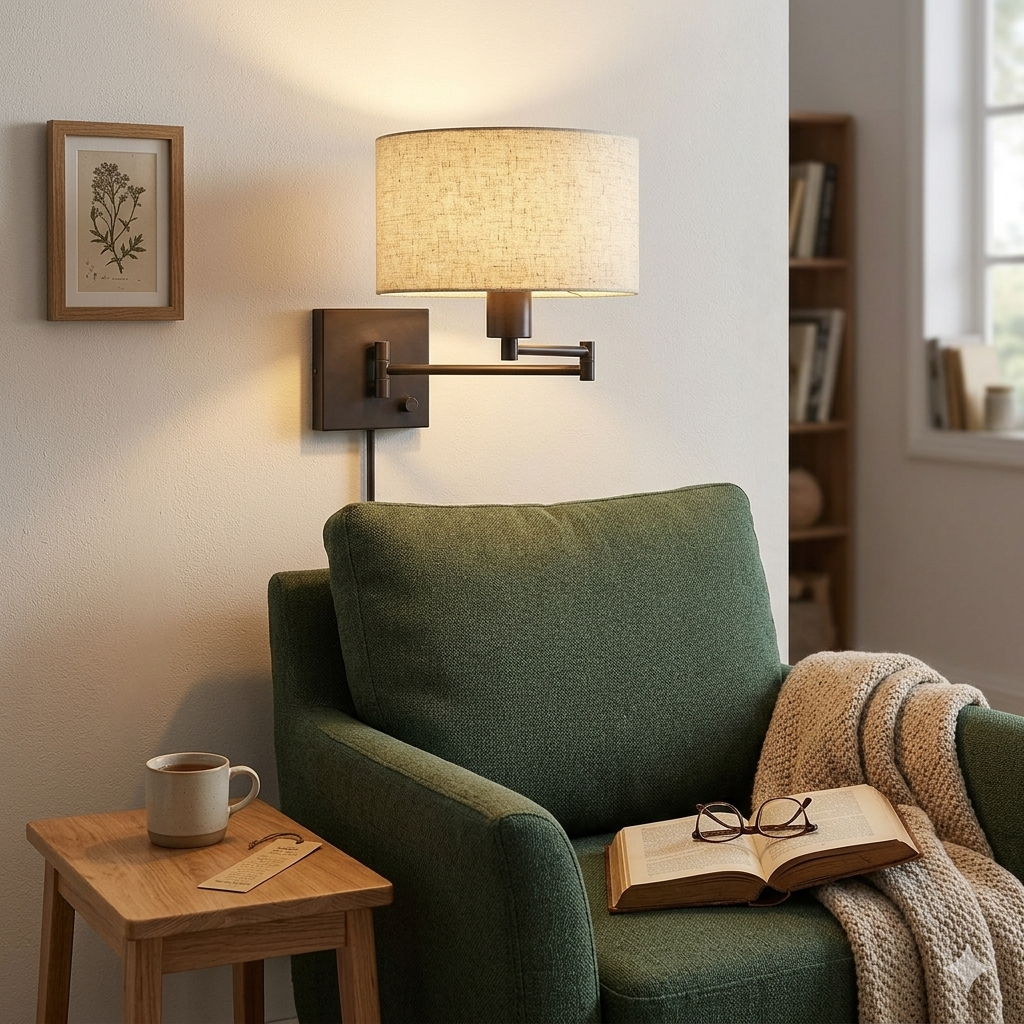
Plug-In Wall Sconce
A plug-in sconce gives you that polished built-in-library feeling without hardwiring anything into the wall.
Check plug location, cord routing, bulb compatibility, and mounting hardware.
Check light output, cord length, mounting method, outlet location, and whether the cord can stay completely out of the walkway.
Skip a wall sconce when the cord must cross the floor or the mounting method is not allowed in your rental.
Turn the Space Beside Your Bed Into a Mini Nook
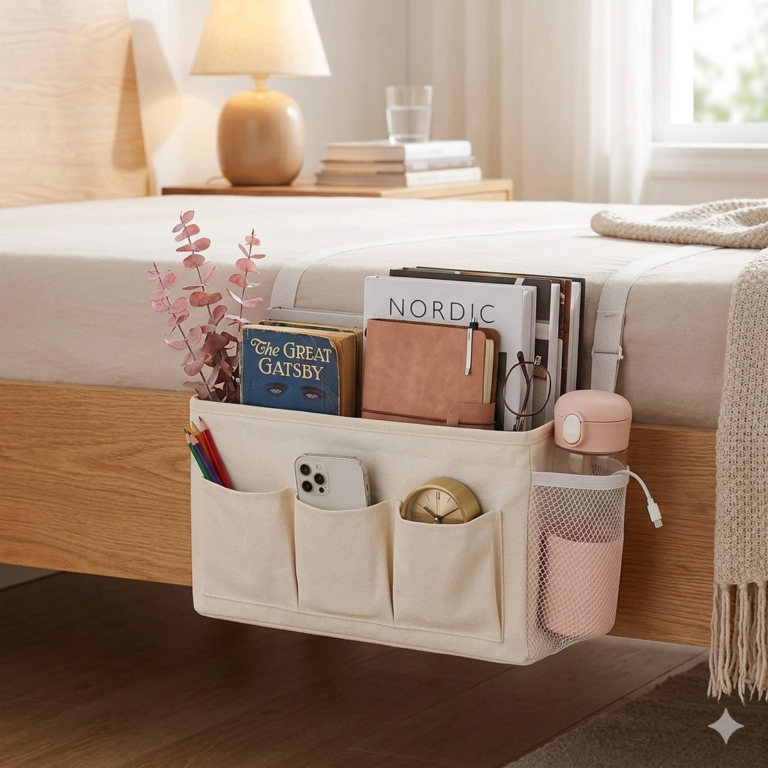
When there is not enough room for a separate reading corner, replace a bulky nightstand with a slim table and add a compact chair nearby.
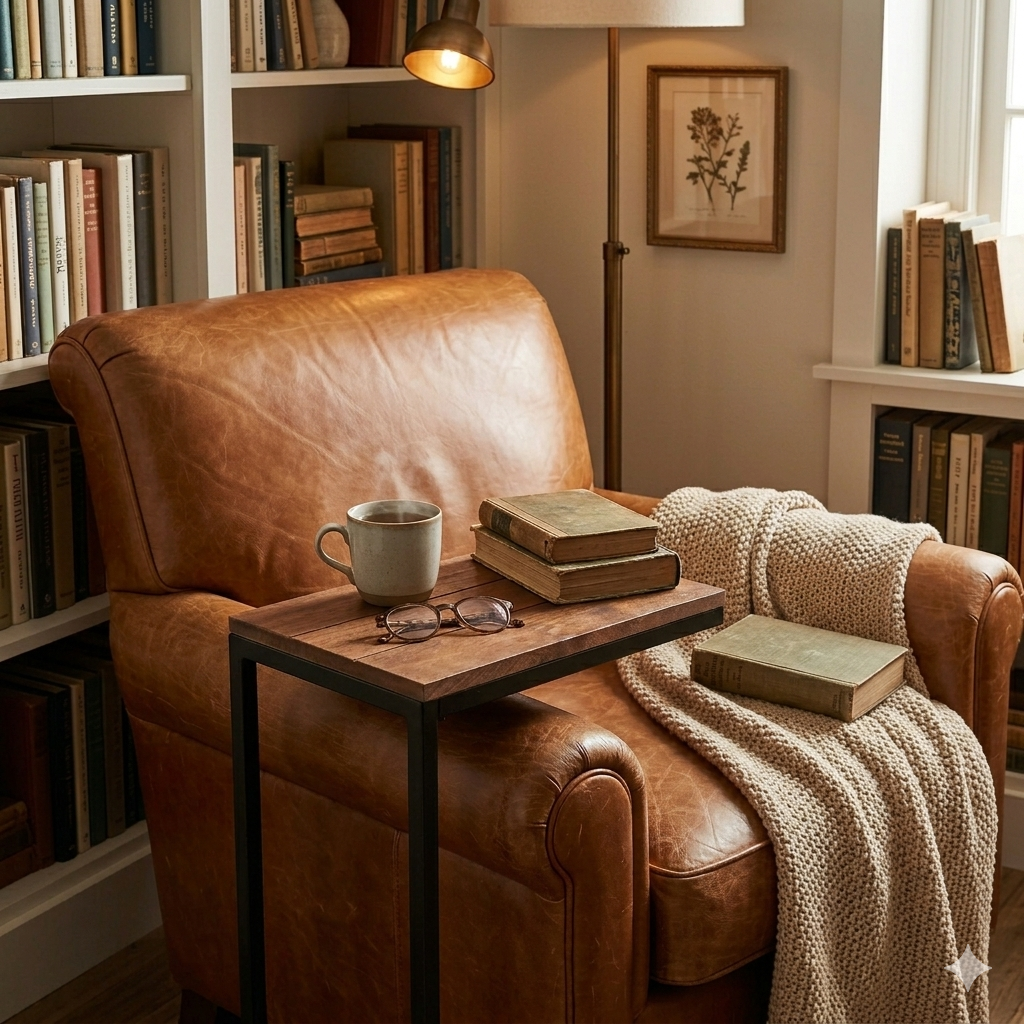
Slim C-Shaped Side Table
This style can tuck close to a chair or slide partially beneath it, giving you a spot for coffee and a book without a wide base.
Check the table’s base direction, top height, and clearance under the chair or bed.
Measure the chair, C-table base, bed clearance, drawer swing, and your normal path in and out of bed.
Skip the extra chair when it blocks the bed, closet, dresser, or the safer route through the room.
Ideas 10–12: The Hardworking Furniture Nook
Pick one piece that does more than one job, then keep the rest of the setup light.
Chair + C-table beside the bed
Storage bench + pillow
Upholstered bench + wall light + hidden storage
Turn an Underused Closet Into a Hidden Reading Nook
An underused closet can become a tiny retreat with a bench cushion, removable wallpaper, and rechargeable lighting. Just make sure you are not sacrificing storage that your household truly needs.
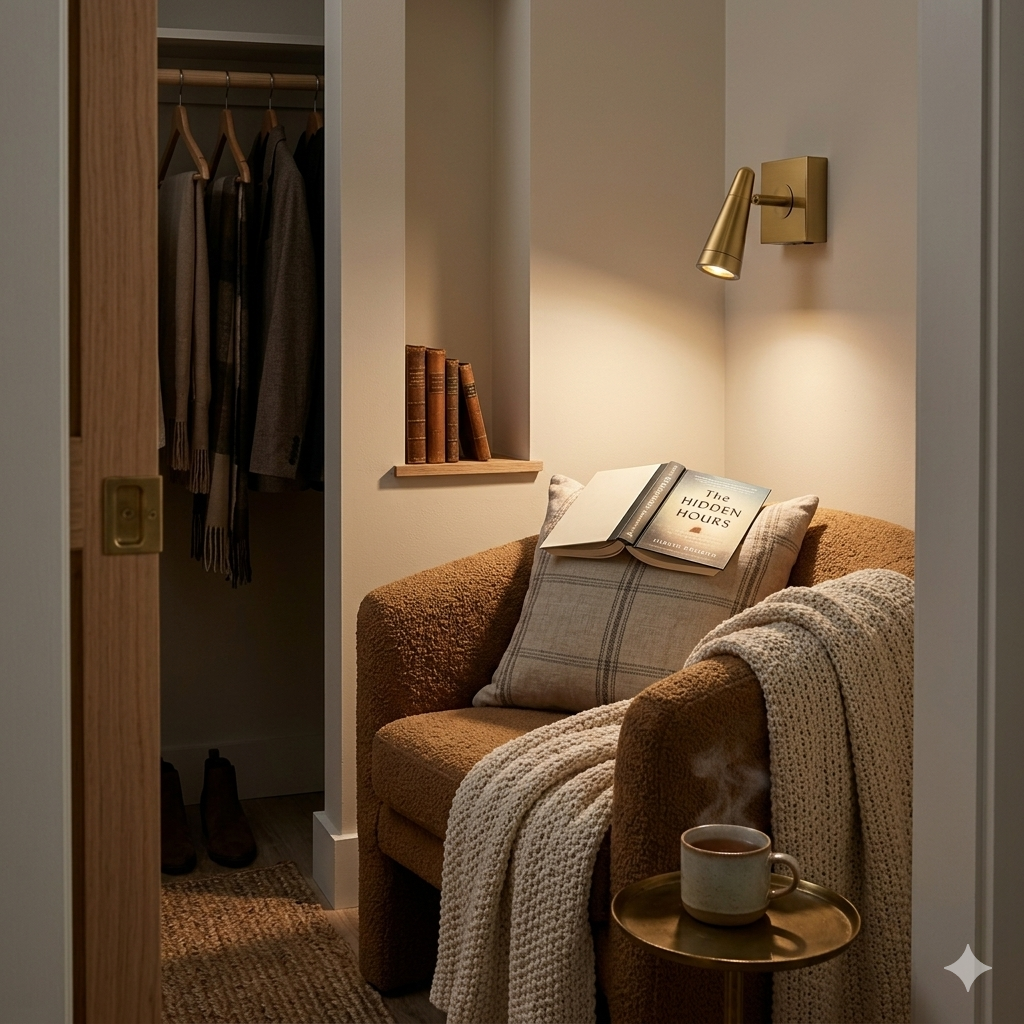
Rechargeable Wall Light
A rechargeable light can brighten a closet nook without needing an outlet or permanent electrical work.
Check charging method, run time, mounting hardware, and manufacturer safety instructions.
Keep the closet open while in use and check ventilation, outlets, lighting safety, shelf stability, and whether the storage is truly expendable.
Skip this idea when the closet is needed, poorly ventilated, too enclosed, or part of an exit route. Do not crowd it with cords or heat-producing lights.
Layer Soft Textures for a Relaxed Boho Nook
The easiest way to create a collected, relaxed look is through texture: a woven basket, tasseled pillow, knit throw, and warm wood side table.
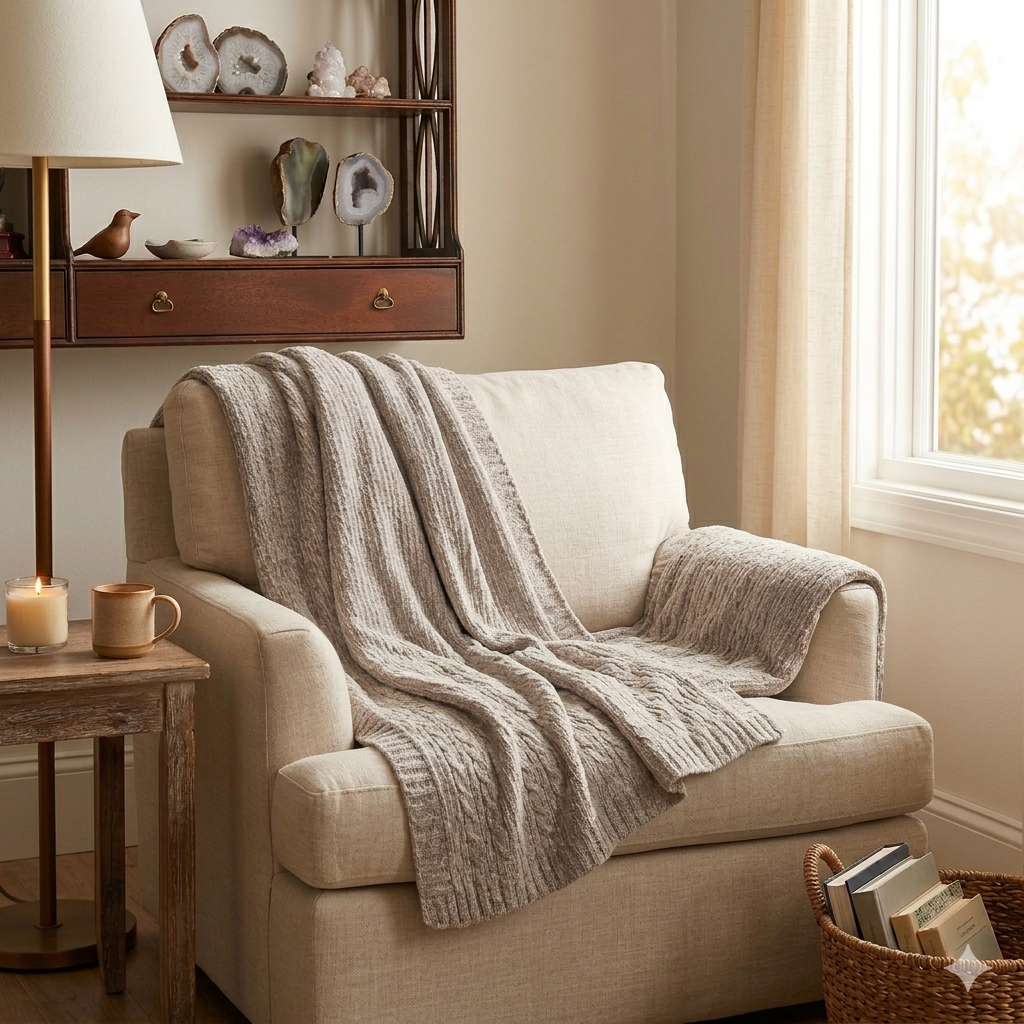
Soft Knit or Woven Throw Blanket
One good throw can make a basic chair look ten times more inviting. Draping it casually over one arm keeps the nook relaxed.
Check wash instructions, fiber content, size, and whether the throw sheds.
Choose one throw and one supportive pillow first. Repeat two or three textures instead of adding a different layer everywhere.
Skip extra pillows or baskets when they reduce the usable seat, collect clutter, or make the corner harder to reset.
Make a Five-Minute Reading Nook With What You Already Own
Pull a comfortable chair toward a lamp, add a pillow, place a small basket nearby, and stack your current reads on top. Congratulations: the nook has officially entered the chat.
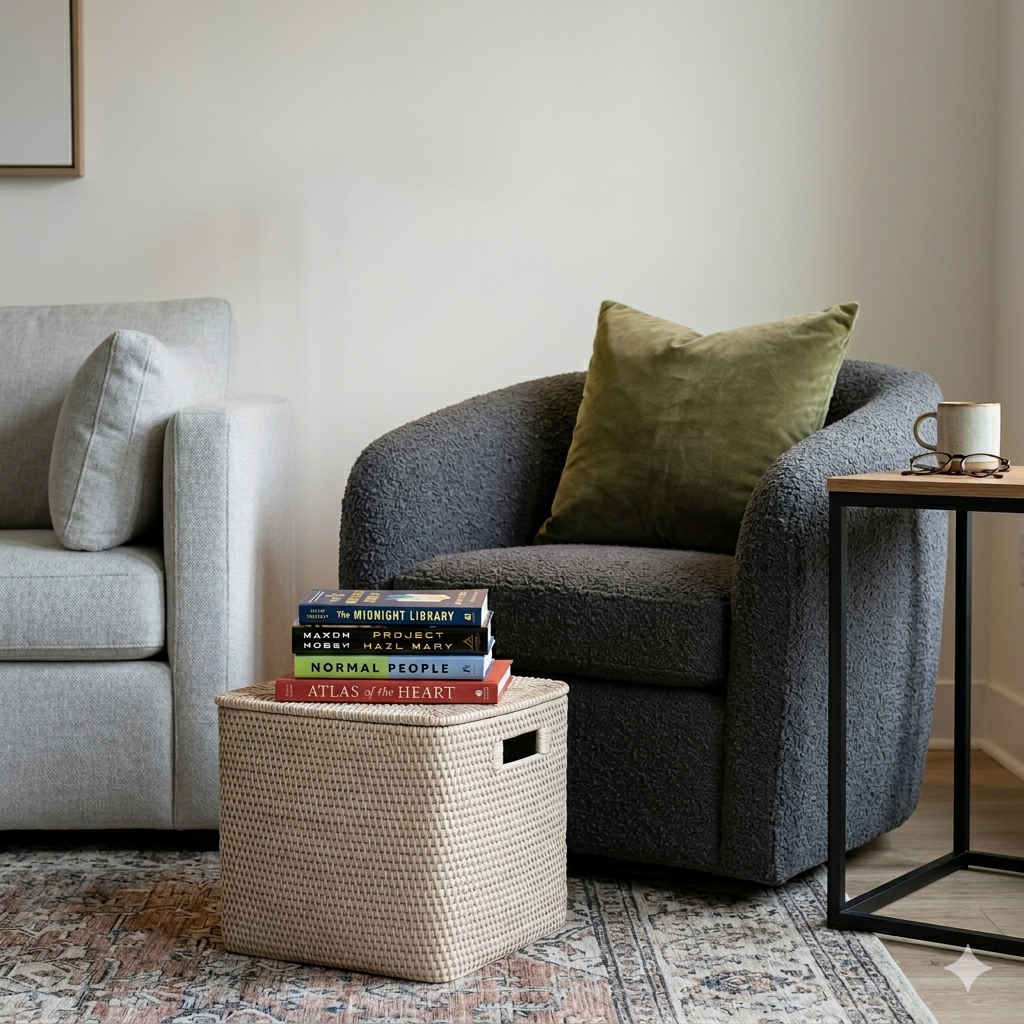
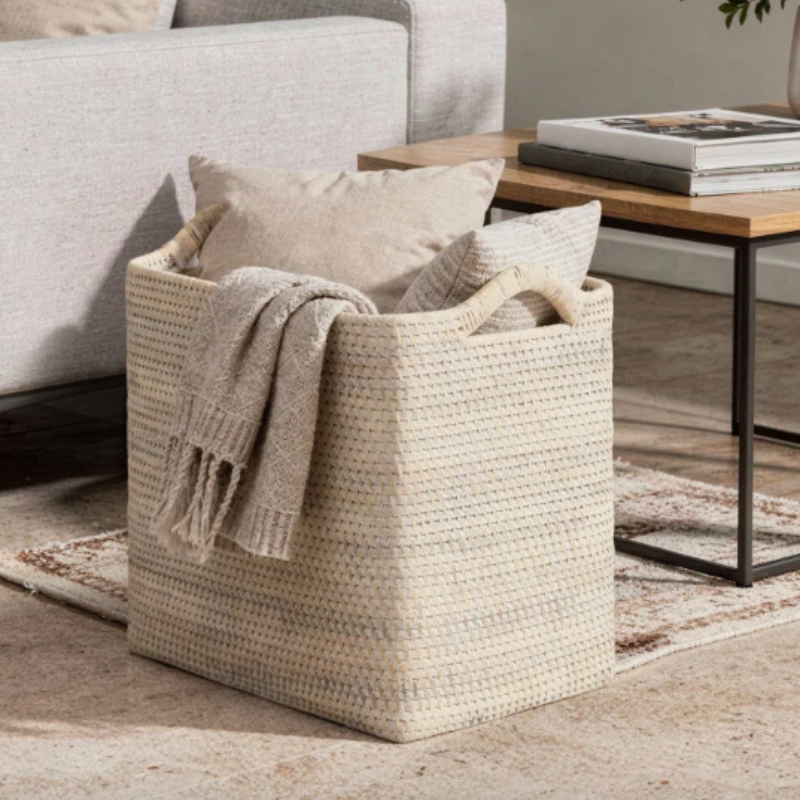
Small Woven Storage Basket
Use it to hold current books, magazines, a blanket, or the items that normally wander around your living room with no permanent address.
Shop your home first; buy only the one item that solves a repeated problem.
Move the chair, lamp, basket, and current books into place, then use the nook for one week before shopping.
Skip every new purchase until the test proves exactly what is missing: support, light, a surface, or simple book storage.
Ideas 13–15: The Low-Commitment Cozy Nook
Test the corner with what you own before spending. The missing piece should reveal itself through use.
Borrow a chair, lamp, and basket from another room
Add one supportive pillow or focused light
Upgrade only the item that repeatedly feels uncomfortable
More Reading Nook Details to Consider
These smaller pieces can help finish the space, but you definitely do not need all of them. Pick the one item that solves an actual problem in your nook.
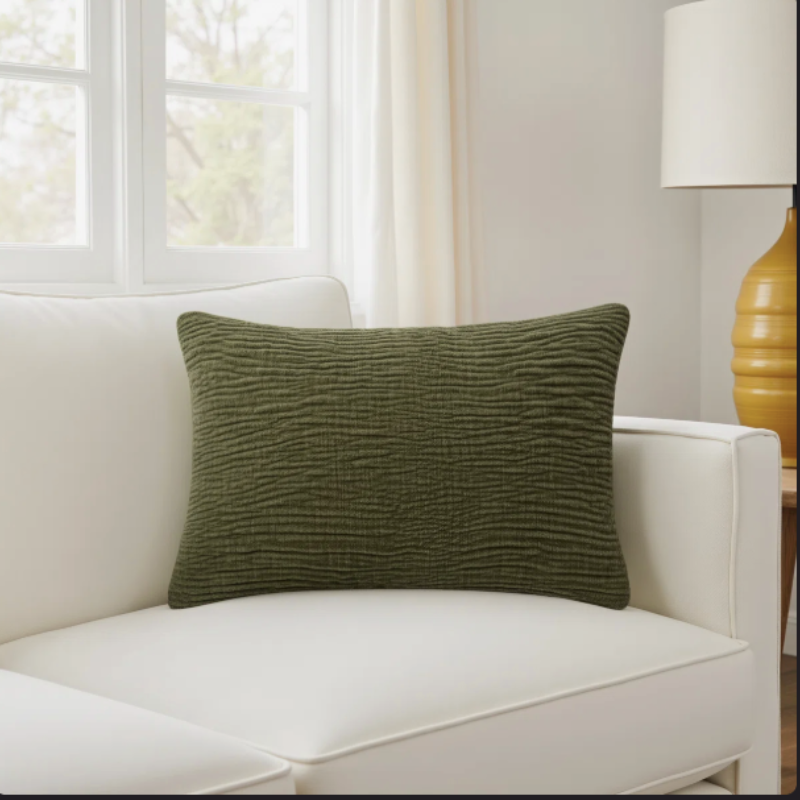
Petite Side Table
Just enough room for your book, glasses, and very necessary coffee.
See the table →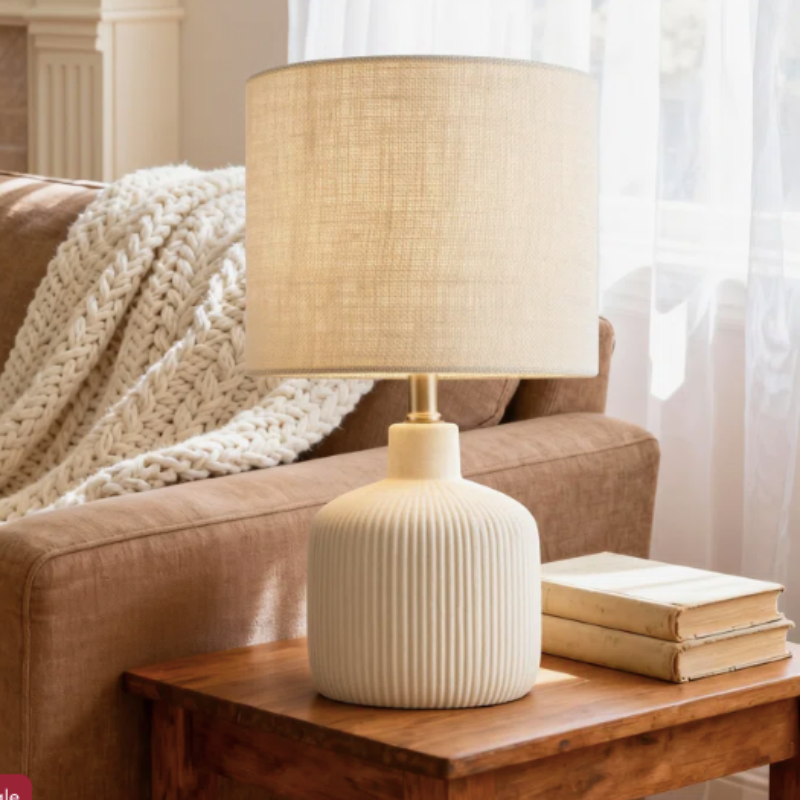
Your Reading Nook Decision Checklist
Create the Nook Your Room Can Actually Support
Pick the idea that matches your available space, reading habits, and daily walkway—not simply the prettiest photo. Tape out the footprint, move in the pieces you already own, and use the corner before deciding what to buy.
When one missing piece becomes obvious, choose the version that solves that specific problem. That might be a more supportive chair, focused light, a narrow surface, or simple book storage. It probably is not all four at once.