Creating a Calm, Clutter-Free Home for Busy Moms
Realistic Organization for Busy Families
A calmer home starts with fewer decisions—not more matching bins
Use this guide to identify the clutter that creates the most daily stress, build a simple home for it, and connect that system to the room-by-room organization help already available on Compact Nest Living.
Affiliate disclosure: This post may contain affiliate links. If you shop through one of my links, I may earn a commission at no additional cost to you. Product suggestions should support a useful system—not replace decluttering, measuring, or choosing a realistic routine.
Small homes can look and feel cluttered quickly because the same rooms support several parts of family life. The living room may also be a playroom. The kitchen counter becomes a mail station. Clean laundry waits on the sofa because getting it all the way into drawers is the step that keeps breaking down.
That does not mean you are bad at organization. It usually means the current system asks for too many decisions, lives too far from where the mess happens, or does not have enough capacity for real family life.
The goal is not a home that stays photo-ready all day. It is a home that can recover from breakfast, toddler play, errands, laundry, and dinner without requiring a heroic cleaning session every night.
The goal is not a home that never gets messy. The goal is a home that is easier to reset after real life happens.
Start With Daily Friction
Which clutter problem keeps coming back?
Choose the pattern that interrupts your day most often. That is a better starting point than the room that looks worst.
The Compact Nest Method
A four-step system for almost any recurring mess
Use the same framework for toys, toiletries, mail, laundry, pantry items, and everyday drop zones.
Remove
Throw away trash, relocate obvious strays, and remove duplicates or items that no longer deserve the space.
Locate
Place the category close to where it is used, removed, dropped, or needed—not where a storage photo says it belongs.
Simplify
Use broad categories and easy openings. Every lid, label, stack, and extra step makes tired-day maintenance harder.
Reset
Choose a tiny repeatable reset that returns the system to usable—not perfect—before it completely breaks down.
Systems for Real Family Life
Six simple systems that reduce everyday decisions
Each one is designed to remain usable on a tired Tuesday, not just immediately after an organizing project.
1. Put the drop zone where the dropping happens
Use hooks, a shallow tray, and one small container exactly where bags, keys, mail, and shoes naturally land.
Make it easierKeep the most-used items visible and reachable with one hand.
Skip this mistakeDo not place the system across the room and expect everyone to change direction.
2. Use one temporary reset basket
Collect items that belong elsewhere during a fast cleanup. Return the obvious things now and schedule the basket itself for a later reset.
Make it easierUse one basket for the shared living area rather than hiding a stray basket in every room.
Skip this mistakeDo not let the reset basket become permanent storage with no emptying routine.
3. Give toys broad, obvious categories
Books, blocks, vehicles, pretend play, and stuffed animals are often enough. Fewer categories mean fewer cleanup decisions.
Make it easierPlace the bins low enough for children to help and keep lids off daily-use categories.
Skip this mistakeDo not create twelve tiny categories nobody can maintain after bedtime.
4. Close the laundry loop
Put hampers where clothes come off, create a spot for outgrown or stained items, and simplify folding for categories that do not need it.
Make it easierStore everyday clothing close to where clean laundry is sorted.
Skip this mistakeDo not design a seven-step laundry process when the household consistently completes only four steps.
5. Give paper three destinations
Create one small station for items to act on, items to file, and paper to recycle. Process it on one predictable day.
Make it easierOpen mail beside the recycling bin and keep the action folder visible.
Skip this mistakeDo not use one deep basket for every paper entering the home.
6. Protect one usable surface
Choose one counter, table, dresser top, or section of the kitchen that stays mostly clear so the room remains functional even when life is busy.
Make it easierMove unrelated categories out of the room instead of organizing them more attractively on the surface.
Skip this mistakeDo not decorate every inch of the one surface your family needs to use.
Room-by-Room First Moves
Choose one action, one thing to skip, and one deeper guide
This keeps the pillar post useful while allowing your room hubs and supporting articles to do the detailed work.
Catch items at the door
Start here: Add a hook, key tray, and footwear boundary where the clutter already lands.
Skip: A deep console that narrows the walkway.
Find renter-friendly storage spots →Restore the walking path first
Start here: Use broad toy bins and one hidden-storage piece for blankets or shared clutter.
Skip: Styling shelves before the floor and seating work.
Explore small living-room ideas →Protect the main prep zone
Start here: Remove non-kitchen categories and keep only true daily appliances on the counter.
Skip: Buying risers and bins before removing duplicates.
Use the small-kitchen organization plan →Separate daily products from backups
Start here: Keep one open item of each type accessible and group replacements together.
Skip: Closed storage for damp towels or overcrowded shower products.
See space-saving bathroom solutions →Reduce visual and clothing overflow
Start here: Clear the floor, simplify the nightstand, and use hidden storage for occasional items.
Skip: Adding furniture before checking under-bed and closet capacity.
Browse bedroom organization ideas →Reset visible impact areas
Start here: Clear trash, floors, the main kitchen surface, and the seating area.
Skip: Opening a deep-cleaning project at the end of a long day.
Follow the full 15-minute reset →Avoid Competing With Your Reset Article
Keep the full minute-by-minute routine in its own supporting post
This pillar explains why simple systems matter. The separate reset article should own the detailed timed routine, reset tools, and daily checklist. Linking between the two helps each page target a clearer search intent.
Buy Only After the System Is Clear
Choose organization products that reduce a step
The right product makes putting something away easier. The wrong one becomes another object your home has to store.
Usually worth considering
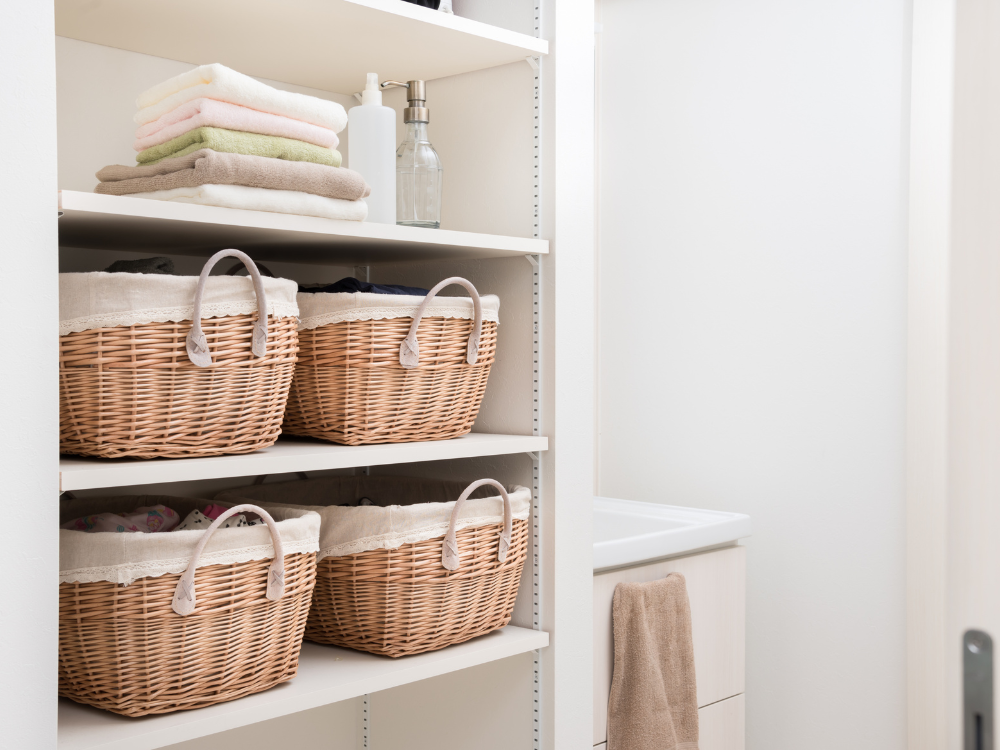
- Open baskets for toys and fast family cleanup
- Hooks placed exactly where bags and towels land
- Storage ottomans or benches that replace another piece
- Slim carts for measured, accessible narrow gaps
- Clear bins for backups you need to inventory
- Drawer dividers for one repeated small-item problem
Usually worth skipping
- Matching container sets before decluttering
- Tiny categories that require constant sorting
- Lidded storage for the items used all day
- Furniture that blocks a walkway or door swing
- Storage far from where the item is used
- Anything purchased only because the makeover photo looked satisfying
Make the System Survive Family Life
Five rules that keep organization realistic
A useful system should still work when everyone is tired, rushed, or distracted.
Keep it close
The farther an item must travel, the more likely it is to be dropped early.
Use broad categories
Books and blocks are easier to maintain than twelve micro-categories.
Leave breathing room
A completely full bin or drawer becomes difficult to use before anything new enters.
Reduce lids and stacks
Daily items should not require moving or opening several things first.
Review the failure
When clutter returns, change the system instead of assuming the family needs more discipline.
Busy-Mom Organization FAQ
Questions readers may ask before reorganizing
Where should I start when the whole house feels cluttered?
Start with the area that blocks a daily routine: the kitchen surface needed for meals, the floor path used by the family, or the entry pile that slows every departure. Choose one visible win rather than opening several projects.
How do I organize toys without filling the room with bins?
Reduce the number of toys available at once, use a few broad categories, and choose containers that fit the actual shelf or floor space. Rotate some toys rather than adding more permanent storage.
What can I do when my family does not maintain my systems?
Move the storage closer, remove a lid, broaden the category, or reduce the number of steps. The system may be asking too much in the moment when the item is used or dropped.
Should I declutter before buying organizers?
Yes. Decide what remains, where it will live, how often it is used, and how much capacity it needs. Then measure before purchasing the smallest organizer that supports the routine.
How often should I reset a small home?
Use a short daily reset for visible areas and a weekly review for baskets, papers, laundry bottlenecks, and categories that are starting to overflow. The full 15-minute routine is linked in this guide.
Progress Over Perfection
Your home only needs to become easier to recover
Begin with one repeated frustration. Remove what does not belong, place what remains close to the action, simplify the storage, and test the reset. Once that system works, choose the next small area—not the whole house.
Build the Organization Cluster
Continue with one specific supporting guide
These links create a clear reader journey from the broad pillar into deeper room and routine content.