Small Apartment Reading Nook Guide
Build the nook around the way you actually read
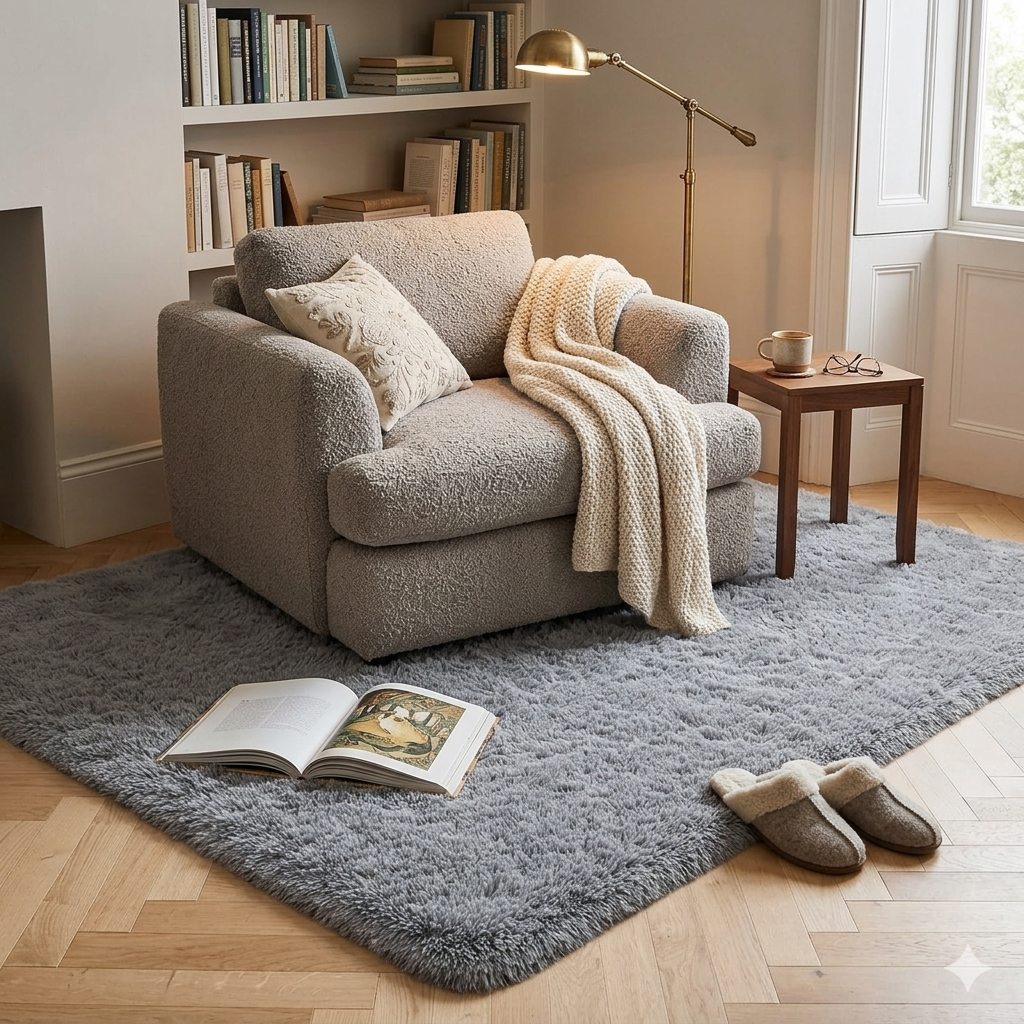
A cozy reading nook does not require a spare room or built-in window seat. It needs a usable corner, supportive seating, focused light, and enough open space that the setup feels inviting instead of crowded.
The best reading nook is not the one with the most pillows, books, or decor. It is the corner you can sit in comfortably, light properly, and maintain without moving furniture every time you use it.
Start with the location and reading position. Then add only the surface, book storage, and cozy layers that support that routine.
A reading nook works when it makes reading easier—not when it simply looks cozy in a photo.
The Four Nook-Fit Tests
Check the corner before choosing the furniture
A nook that fails the walkway, lighting, comfort, or reset test will eventually become general storage.
Location fit
The nook sits outside doors, closets, vents, patio access, and the main traffic path.
Comfort fit
The seat supports the reader’s posture, feet, back, and preferred reading position.
Lighting fit
The light reaches the page clearly without glare, deep shadows, unstable fixtures, or cords across the floor.
Reset fit
Books, blanket, cup, and small accessories can be put away quickly so the nook stays usable.
Choose the Available Space
Which type of reading nook fits your apartment?
Jump to the setup that matches the room and the way the corner needs to function.
Measure the Corner in Use
Test the chair, light, and table before moving furniture
The seat may fit inside the corner while the side table, floor lamp, or walking route does not.
Measure these areas
- Available width and depth of the nook
- Chair width, depth, back height, and seat height
- Floor-lamp base or side-table footprint
- Clearance from curtains, doors, drawers, vents, and outlets
- The remaining walkway after every piece is included
Use the painter’s-tape test: mark the chair, table, and lamp base on the floor. Sit in an existing chair inside the outline, reach for the imagined table, and walk around the setup before buying anything.
The Five Essentials
Choose each piece by the problem it solves
The nook does not need five new purchases. Use what you already own and fill only the missing function.
Seating That Supports Your Reading Position
Best forA chair, bench, cushion, or existing seat that supports the way you actually sit for 20–30 minutes.
Check firstMeasure width, depth, arm height, back support, seat height, and the floor space needed to get in and out comfortably.
Skip it whenThe seat looks cozy in photos but forces poor posture, blocks the walkway, or becomes a laundry chair.
Focused Reading Light
Best forA lamp or wall light that directs light onto the page without creating glare or deep shadows.
Check firstConfirm outlet or battery access, cord route, fixture stability, bulb compatibility, and clearance from curtains and textiles.
Skip it whenThe light is decorative but too dim, requires an unsafe cord path, or cannot be mounted properly.
One Small Surface
Best forA compact landing place for a drink, glasses, bookmark, phone, or current book.
Check firstMeasure the chair reach, tabletop size, base footprint, and clearance around the seat.
Skip it whenThe table crowds the chair or becomes another permanent clutter surface.
Limited Book Storage
Best forA basket, shelf, ledge, or nearby bookcase that holds current reads without turning the nook into a full library.
Check firstChoose storage that is stable, easy to reach, and sized for the number of books you realistically keep there.
Skip it whenThe storage blocks the walkway, becomes overloaded, or duplicates a bookcase already close by.
One or Two Cozy Layers
Best forA supportive pillow, throw, or rug that improves comfort without filling the corner.
Check firstConsider washability, shedding, floor grip, allergen needs, and whether the layer adds real comfort.
Skip it whenThe nook requires constant styling or the textiles create heat, dust, or clutter the reader will not maintain.
Four Small-Apartment Nook Setups
Compare the setup, benefit, and tradeoff
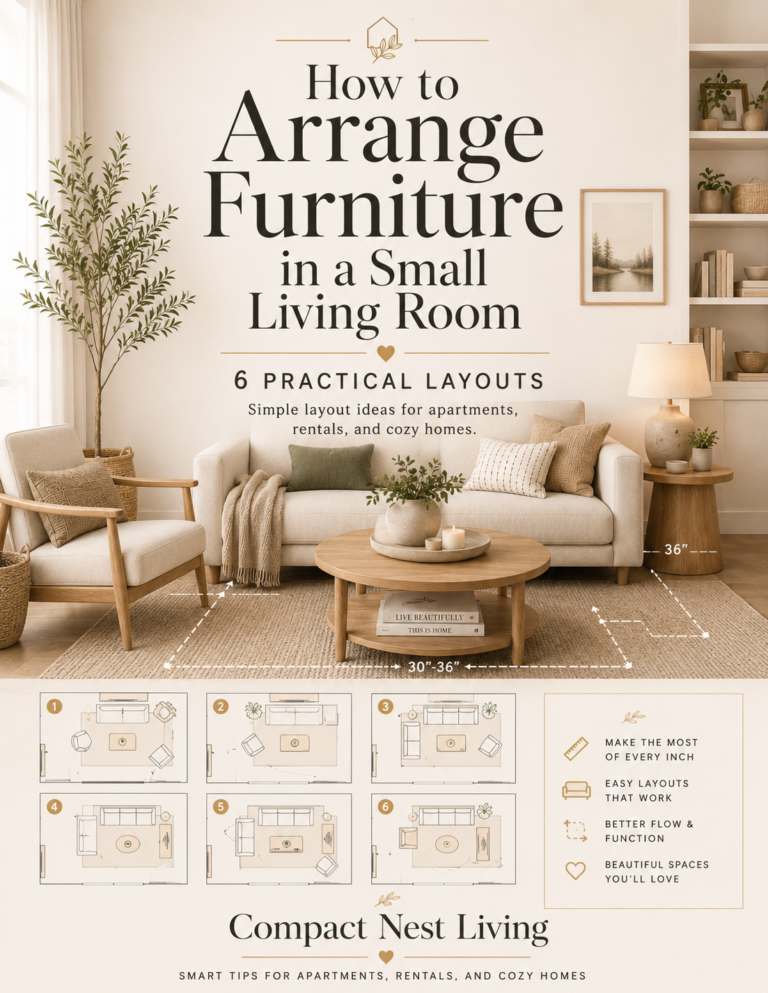
The diagrams are simplified planning visuals. Test your actual furniture dimensions with tape.
Nook Option 1
Living Room Corner
Best forAn unused corner near the main seating area where the nook can feel separate without blocking circulation.
- Angle a compact chair slightly toward the room.
- Use a slim floor lamp or small side table.
- Keep the chair outside the main sofa-to-TV path.
- Store only current books nearby.
Watch out forThe nook should not become overflow seating cluttered with baskets, throws, and side tables.
Skip this setup whenThe chair blocks the main walkway or makes the existing seating arrangement harder to use.
Nook Option 2
Bedroom Reading Spot
Best forA bedroom corner where reading helps separate wind-down time from the bed.
- Choose a compact chair, bench, or supported floor cushion.
- Use focused light that does not disturb the sleeping area.
- Protect the path around the bed and closet.
- Use one small basket or shelf for current reads.
Watch out forA chair that becomes a permanent clothing pile is not functioning as a reading nook.
Skip this setup whenThe setup blocks the closet, dresser drawers, window, or the side of the bed used most often.
Nook Option 3
Window-Side Nook
Best forA bright corner where natural light is helpful during the day and a compact lamp can take over at night.
- Place the seat beside—not directly against—the window when curtains need room.
- Check glare, drafts, and heating or cooling vents.
- Use a low table or wall-mounted light to save floor space.
- Keep the window latch and curtains accessible.
Watch out forNatural light changes throughout the day, so the nook still needs an evening lighting plan.
Skip this setup whenThe chair blocks the window, radiator, vent, patio access, or creates unsafe cord placement.
Nook Option 4
Shared Family Reading Nook
Best forA family room where an adult chair and a small child-friendly reading zone can share one quiet corner.
- Keep the main chair positioned for comfortable adult supervision.
- Add a soft floor spot or small child seat nearby.
- Use low, stable book storage with only a limited selection.
- Keep the play and walking paths separate.
Watch out forLow furniture, lamps, cords, and book storage must be stable and appropriate for the household.
Skip this setup whenThe nook sits beside a television stand, floor lamp, patio door, sharp corner, or other high-traffic hazard.
Keep the Nook From Becoming Clutter
Use a four-step reset after reading
A reading nook stays inviting when every item has a simple end-of-day action.
Return the current book to the basket, shelf, or table.
Fold the blanket and return the pillow to the seat.
Remove cups, dishes, toys, mail, and unrelated items.
Clear the small surface and switch off or recharge the light.
Before Adding Another Nook Find
Know what improves the corner—and what crowds it
Usually worth adding when…
- The item fixes a real comfort, lighting, storage, or surface problem
- The footprint fits inside the taped nook without narrowing the walkway
- The finish repeats something already in the room
- The item is easy to clean, move, recharge, or store
- The nook becomes easier—not more complicated—to reset
Usually worth skipping when…
- The item is being added mainly to fill an empty corner
- The chair looks oversized once the side table and lamp are included
- The floor lamp creates a cord across the walking path
- Extra pillows, baskets, or decor reduce the usable seat
- The nook starts holding more books and supplies than the reader uses
Reading Nook FAQ
Questions readers may ask before building the corner
How much space do I need for a reading nook?
There is no universal minimum. Measure the seat, light, surface, and remaining walkway together. A nook can use an existing chair, bench, or supported floor cushion when a full lounge chair will not fit.
Do I need a new chair?
No. An existing chair can work when it has enough support and can be positioned near focused light. A lumbar pillow, footstool, or better lamp may improve comfort more than replacing the seat.
What kind of lighting is best for reading?
Use focused, comfortable light directed onto the page from beside or slightly behind the shoulder. Confirm fixture stability, bulb compatibility, cord placement, and manufacturer guidance.
How can I create a reading nook without adding clutter?
Keep only current reads nearby, use one small surface, choose one or two textiles, and leave part of the floor and wall open. Reset the nook after each use.
Can a reading nook work in a family living room?
Yes. Position the main seat where an adult can supervise the room, keep the nook outside the primary play and walking paths, and use stable, age-appropriate storage and lighting.
Create a Nook You Will Use
Start with the corner, the seat, and the light
Test the footprint, protect the walkway, choose support over size, and keep only current reading materials nearby. A simple nook that is easy to reset will usually be used more than an elaborate corner that requires constant styling.
Keep Planning the Space
Choose the next guide for the room you are working on
Always consider the apartment layout, furniture stability, electrical safety, accessibility needs, child-safety requirements, and manufacturer instructions when creating a reading area.