
Small Living Room Ideas
7 Mistakes Making Your Small Living Room Look Even Smaller
A small living room does not have to feel cramped. These common furniture, layout, lighting, storage, and decorating mistakes may be making your room look more crowded than it really is—and most are surprisingly easy to fix.
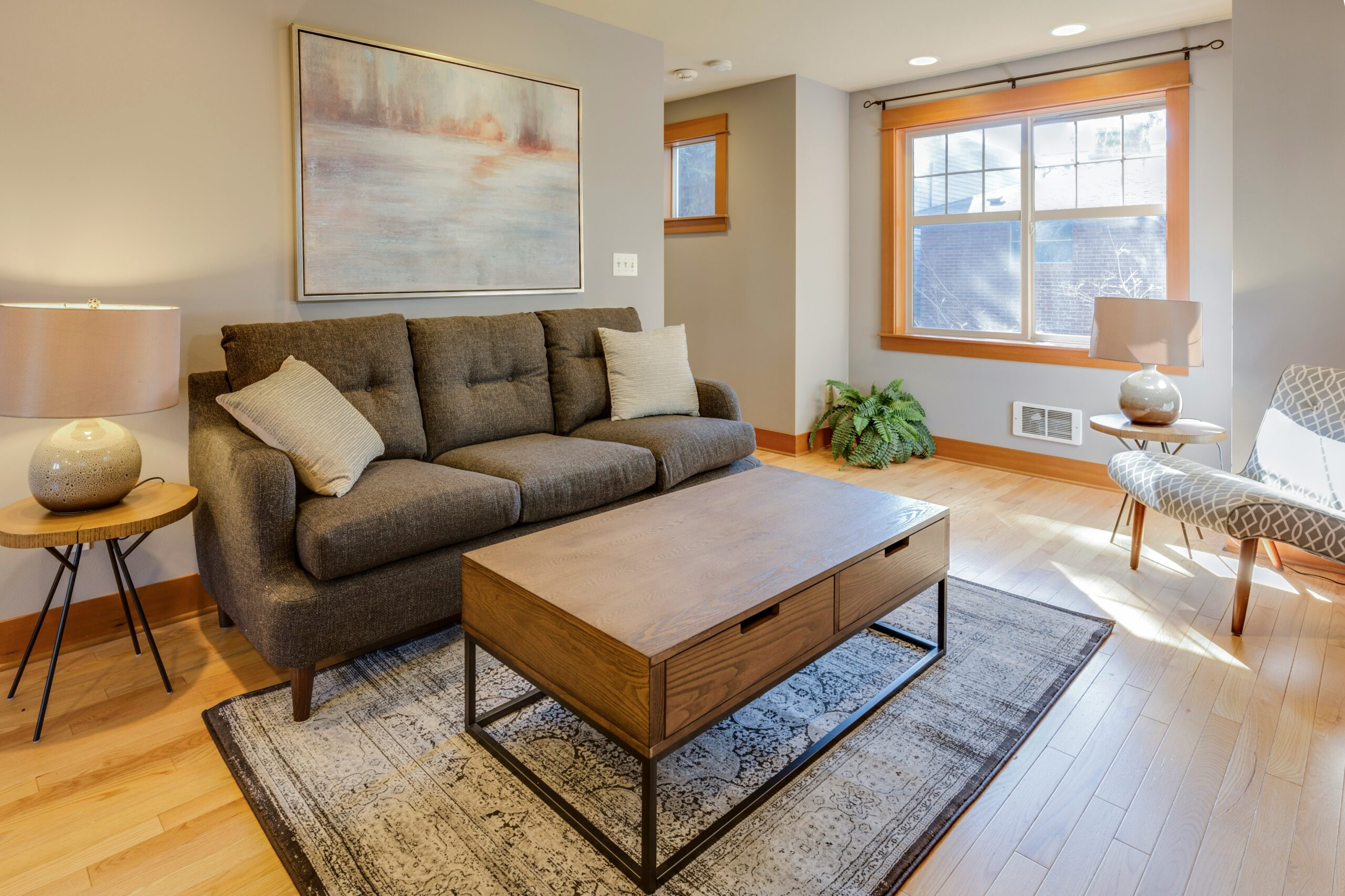
When a living room is short on square footage, every decision becomes more noticeable. A rug that is slightly too small, furniture pushed against every wall, or too many little storage pieces can make the entire room feel tighter.
The good news is that making a small living room feel larger does not necessarily require new furniture or a complete makeover. Sometimes the biggest improvement comes from removing visual clutter, adjusting the layout, or replacing one poorly scaled item with something that works better for the space.
Below are seven common mistakes that can make a small living room look even smaller, along with realistic fixes you can try in a rental, apartment, condo, or compact family home.
The quick answer
Small living rooms usually feel more cramped when the furniture is the wrong scale, the main walkway is blocked, the rug is too small, the room lacks layered lighting, or too many unrelated items compete for attention.
Focus first on clear pathways, properly scaled furniture, fewer freestanding storage pieces, hidden storage, and enough visual breathing room for the eye to rest.
Before You Order
Make sure the furniture will actually fit
A sofa, chair, table, or storage cabinet can fit along the wall and still be wrong for the room. Check the room, doorway, hallway, delivery path, walking clearance, and the extra space needed to open drawers, doors, recliners, or sleeper furniture.
Use the Will It Fit? furniture measuring guide →Small-Space Furniture Guide
Not sure what type of furniture your room needs?
Use my complete small-space furniture guide to compare compact seating, hidden storage, narrow furniture, flexible dining pieces, and furniture that performs more than one job.
Visit the Small-Space Furniture Guide →Pushing Every Piece of Furniture Against the Walls
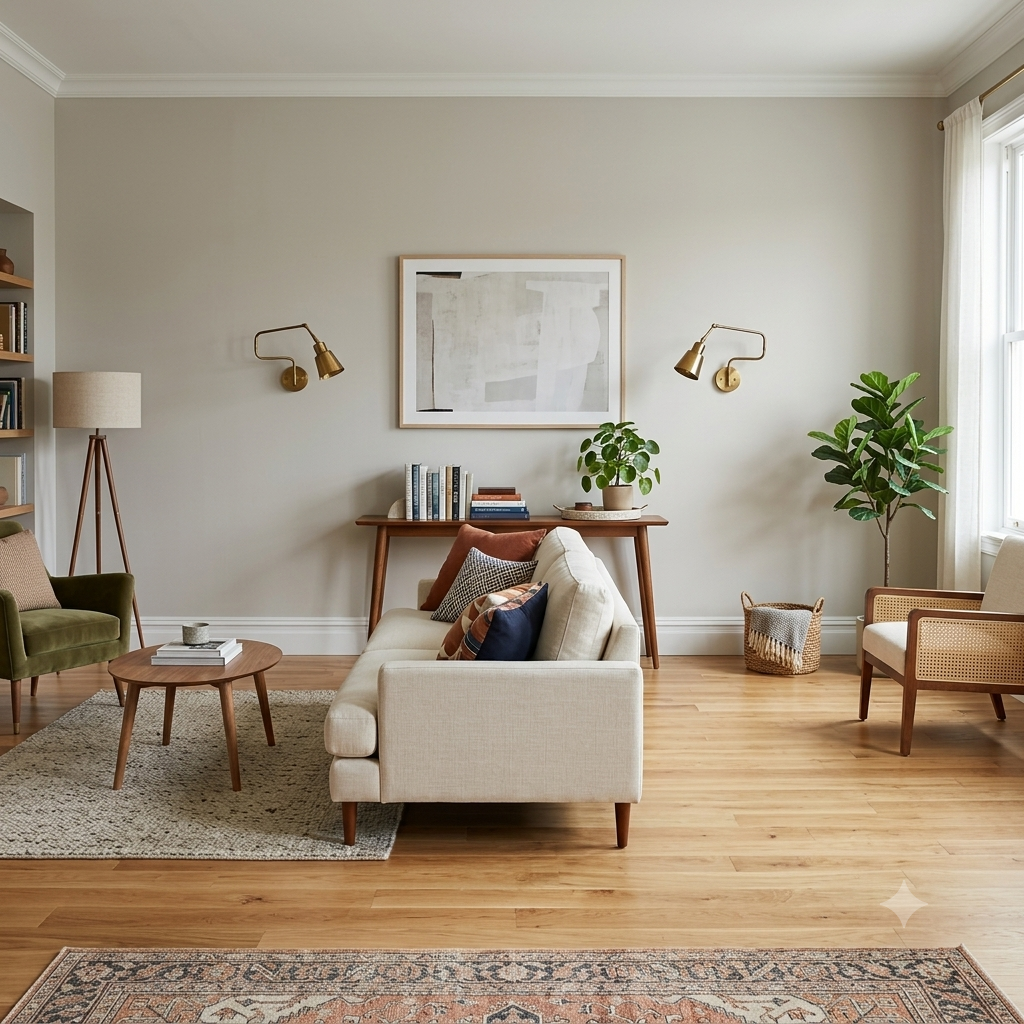
It may seem logical to push the sofa, chairs, tables, and storage pieces against the perimeter of the room to expose as much floor as possible. In some rooms, however, this creates an awkward empty area in the middle while making the edges feel heavy and crowded.
It can also make conversations feel less natural because the seating is spread too far apart. The goal is not always to expose the greatest amount of flooring. The goal is to create an arrangement that feels intentional and allows people to move comfortably.
Try this instead
Pull the sofa a few inches away from the wall, angle a small accent chair toward it, or use a rug to define a compact conversation area. A small amount of breathing room can make the arrangement look more deliberate.
Before changing the layout, identify the room’s main walking path. Keep the route from the doorway to the seating area open whenever possible.
See six practical furniture layouts for a small living room →
Choosing Furniture That Is Too Bulky
A sofa can technically fit inside a room and still be too visually heavy for it. Deep cushions, oversized arms, low solid bases, bulky recliners, and extra-deep seating can take up more visual and physical space than expected.
This does not mean every piece must be tiny. In fact, filling a room with several undersized pieces can make it look more cluttered. One properly scaled sofa often works better than a small sofa, multiple chairs, and several little tables competing for the same space.
Try this instead
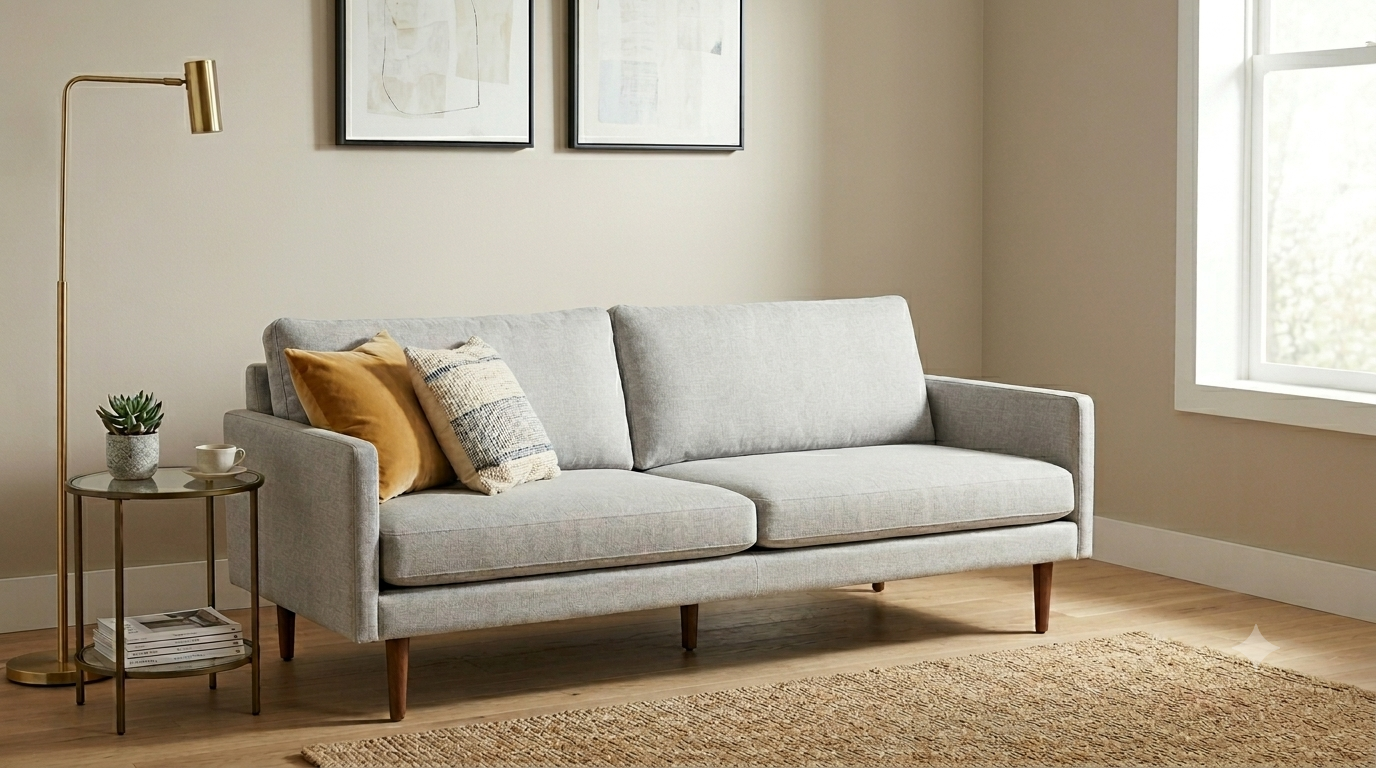
Look for furniture with slim arms, raised legs, shallower seat depths, clean lines, and open space underneath. Raised furniture allows more of the floor to remain visible, which can help the room feel less boxed in.
Measure more than the wall
Check the furniture width, depth, height, seat depth, doorways, delivery path, and the clearance needed to walk around it. A piece that fits along one wall may still block a doorway or extend too far into the room.
Check the full Will It Fit? guide before ordering →
Small-space furniture features worth considering
- Apartment-size dimensions
- Slim or track-style arms
- Visible legs instead of a solid base
- A shallow frame that preserves the walkway
- Built-in storage or another useful second function
- Lightweight pieces that are easier to rearrange
Looking for stylish pieces that work in a smaller home?
I gathered compact furniture, warm lighting, soft textures, practical storage, and renter-friendly decor in one easy-to-browse list.
Browse My Stylish Apartment Decor Finds →Using a Rug That Is Too Small
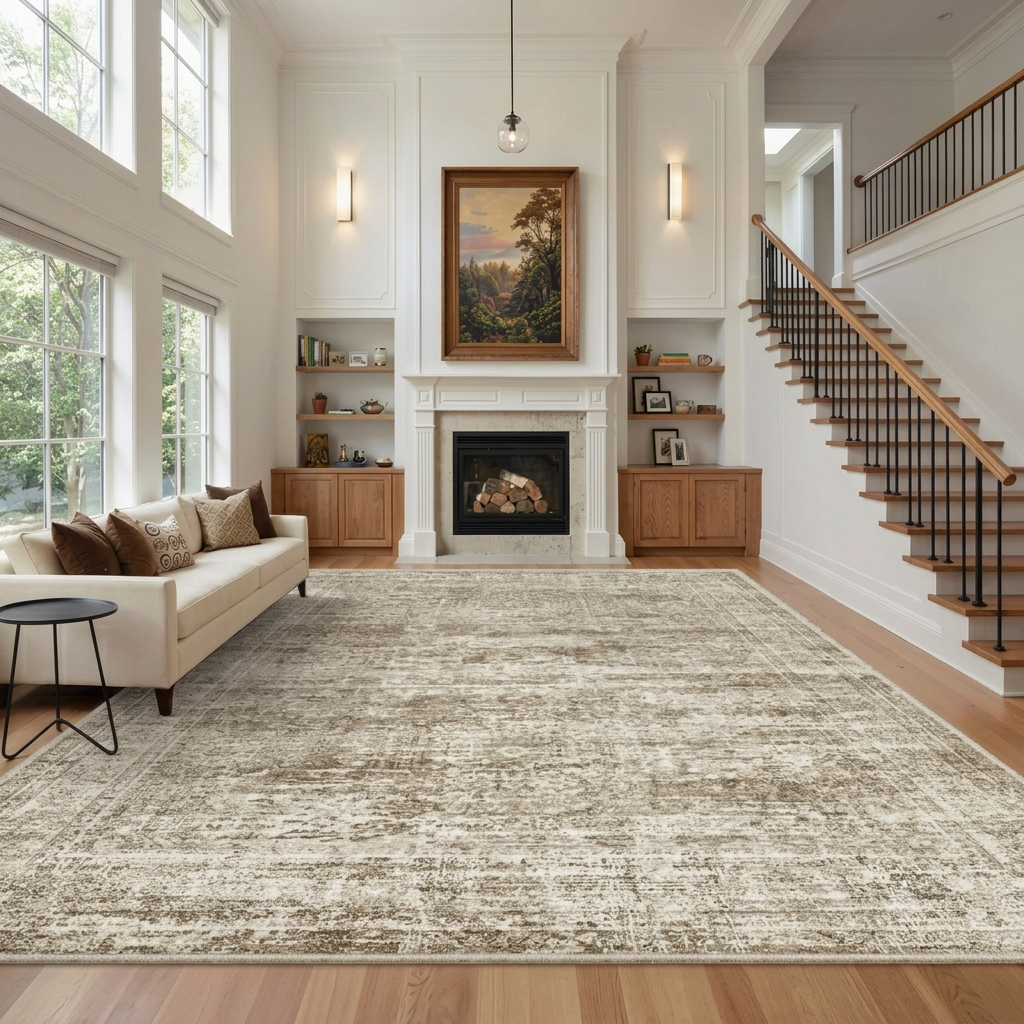
A small rug floating in the middle of the room can visually divide the floor into several little sections. Instead of making the room look open, it may make the seating arrangement feel disconnected.
The rug should help unite the main furniture pieces and define the living area, especially in a studio or open-plan apartment.
Try this instead
Choose a rug large enough for at least the front legs of the sofa and nearby chairs to rest on it. Leave a relatively even border of visible flooring around the rug when the layout allows.
Lighter rugs, subtle patterns, and lower-contrast designs can make the room feel calm, but you do not have to avoid color. A simple, connected color palette matters more than using only beige.
Test the rug size before ordering
Outline the rug dimensions on the floor with painter’s tape. This gives you a clearer picture of how the size will relate to your sofa, chairs, walkway, and surrounding floor than the online product photo alone.
See a Small-Living-Room Rug Option →Blocking Natural Light
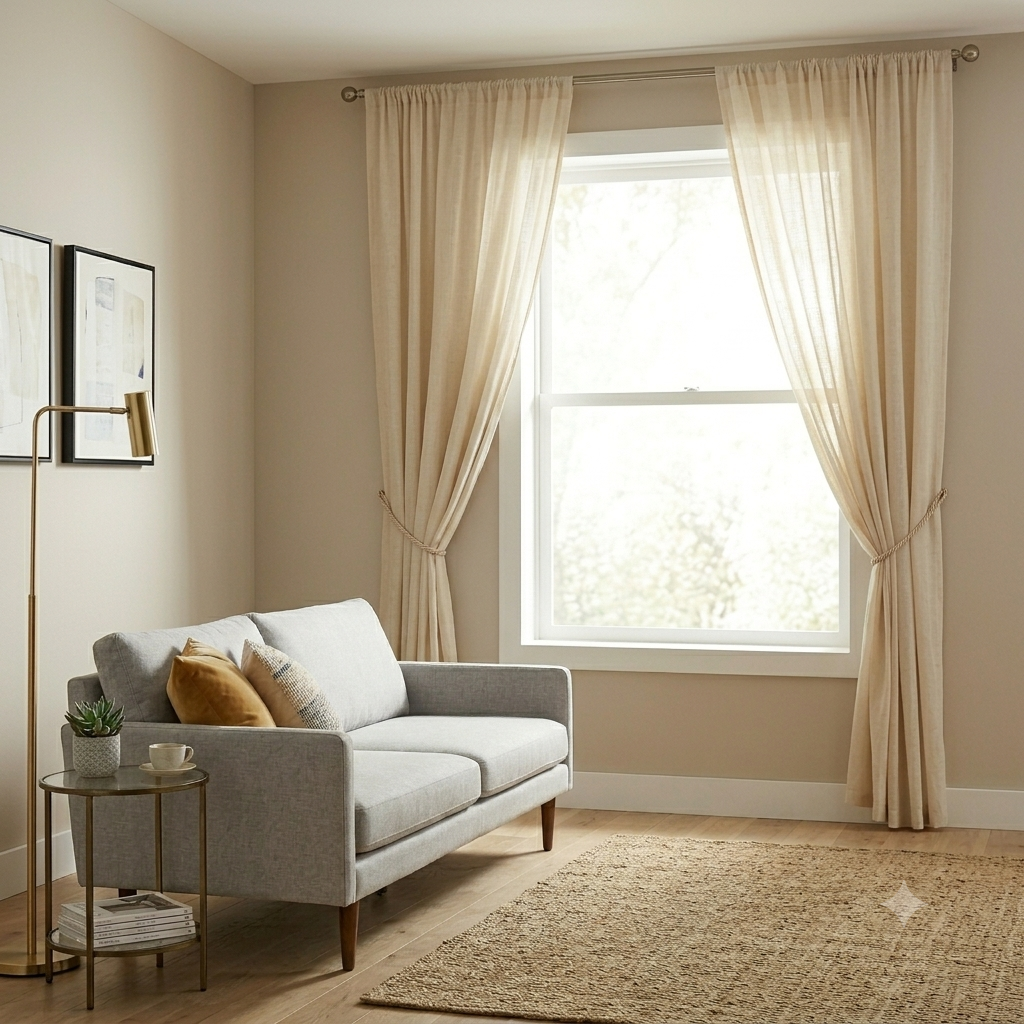
Heavy curtains, dark window treatments, tall furniture, and large plants placed directly in front of a window can make a compact room feel closed off. Natural light helps the eye travel farther through the room and makes walls, furniture, and decor feel less heavy.
Try this instead
Hang curtain rods several inches above the window frame and extend them beyond the sides of the window. This allows the curtains to rest mostly outside the glass when open and can make the window look taller and wider.
Choose lightweight curtain panels, woven shades, or light-filtering treatments when privacy allows. Keep large furniture below the sill or offset from the window so it does not block the main light source.
Relying on One Overhead Light
One bright ceiling fixture can create harsh shadows and leave the corners of the room looking dark. Those shadowy areas visually shorten the room and can make it feel smaller at night.
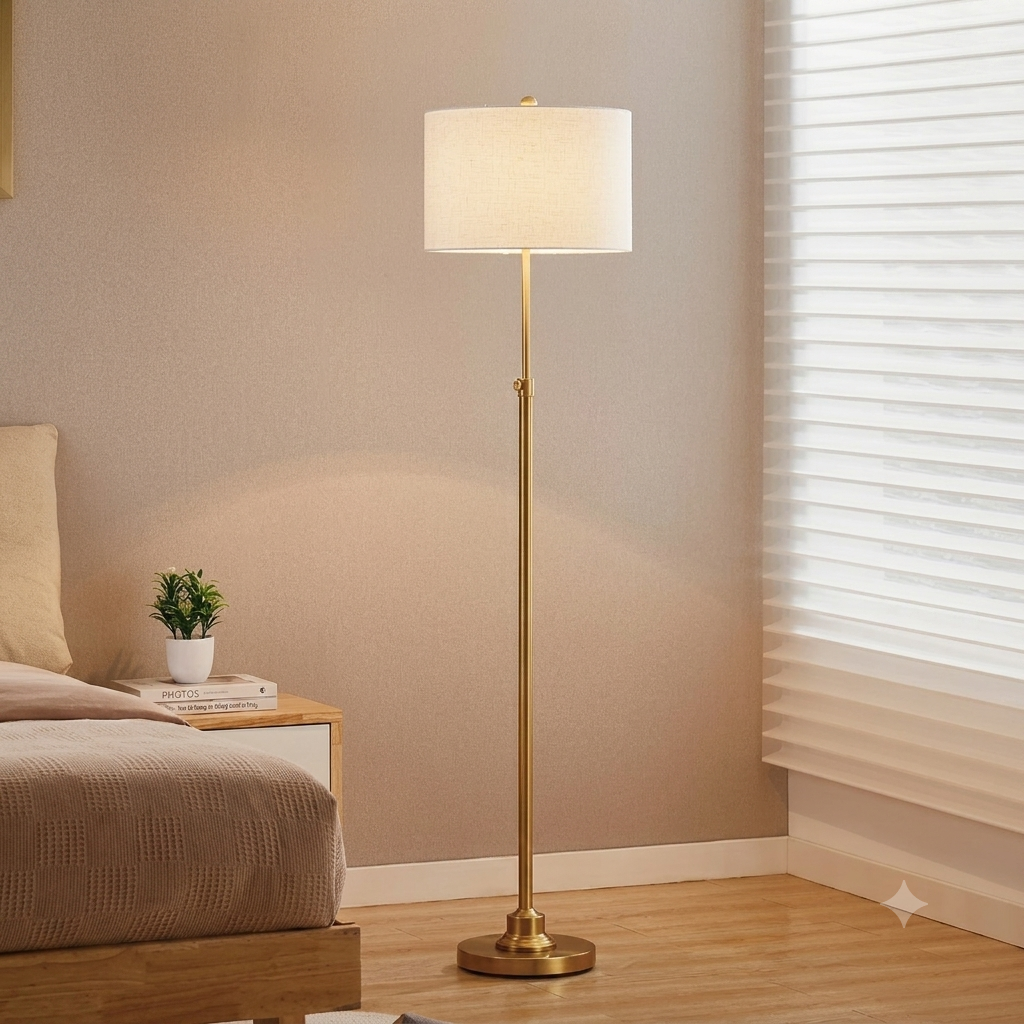
Layered lighting makes a small living room feel warmer and draws attention to different parts of the space.
Try this instead
Combine overhead lighting with a floor lamp or table lamp and one softer accent light. Place light at different heights to reduce dark corners and create a more comfortable evening atmosphere.
Good renter-friendly options include:
- A slim floor lamp beside the sofa
- A small table lamp on a narrow side table
- Plug-in wall sconces
- Rechargeable picture lights
- Warm white bulbs instead of overly cool blue light
Add light without adding tabletop clutter
A slim floor lamp can brighten a shadowy corner without using valuable space on a side table or media console.
View a Slim Floor Lamp →Filling the Room With Too Many Small Items
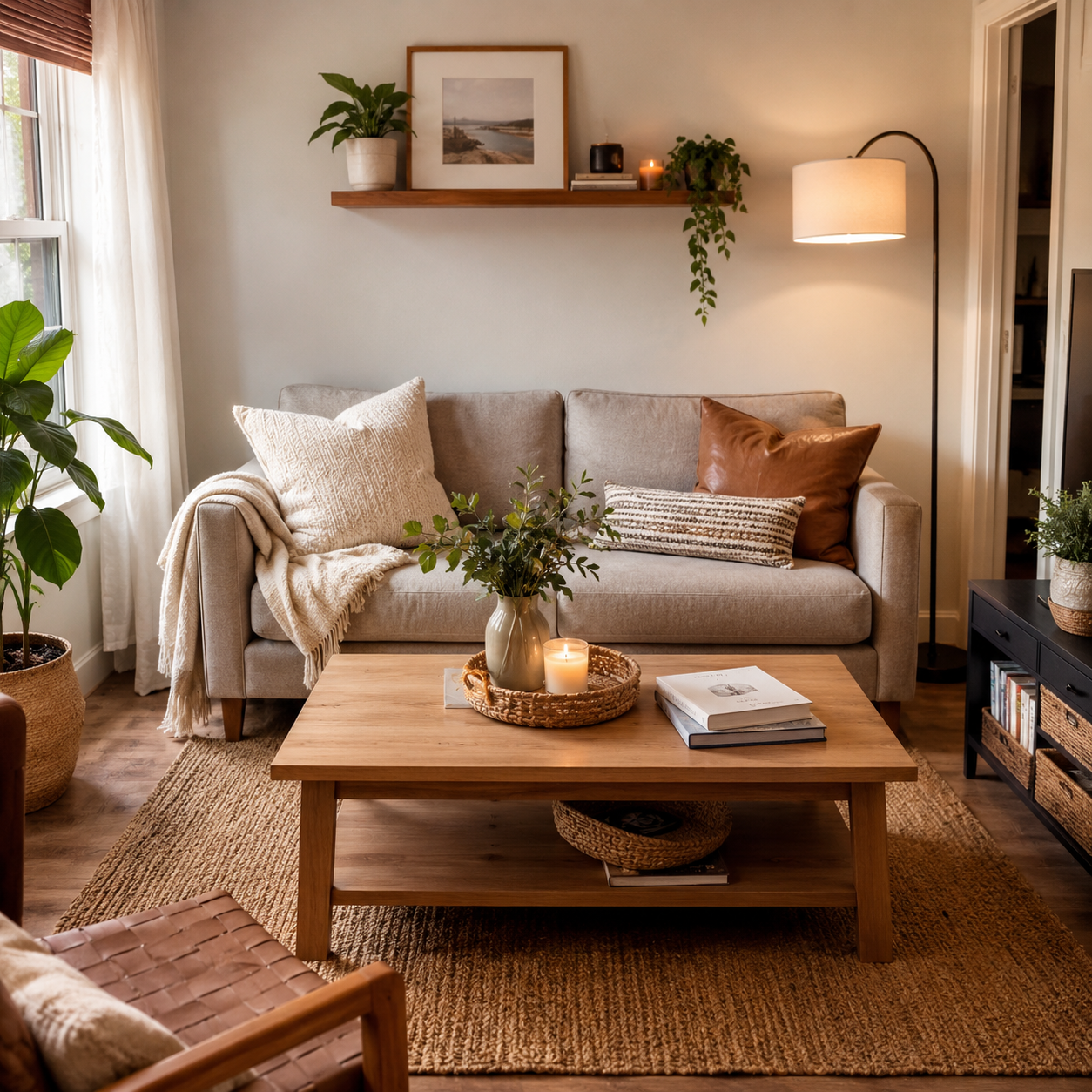
Several small tables, baskets, frames, plants, pillows, and decorative objects may seem easier to fit than a few larger pieces. But when every surface holds multiple items, the eye has nowhere to rest.
This is one reason a small living room can feel busy even when it is technically clean.
Try this instead
Group decor into small collections rather than scattering it across every surface. Choose one larger piece of artwork instead of several unrelated little frames, and leave some areas intentionally empty.
Use this simple editing rule
Remove everything from one surface, then add back only the items that are useful, meaningful, or visually strong. A tray can help several smaller objects read as one organized collection.
Buying More Storage Without Solving the Clutter Problem
When everyday items have no assigned home, they tend to collect on the coffee table, sofa, floor, or media console. Visible clutter quickly makes a small living room feel crowded.
Adding another cart, cabinet, shelf, or set of baskets is not always the answer. Too many freestanding storage pieces can take up floor space and create a different kind of visual clutter.
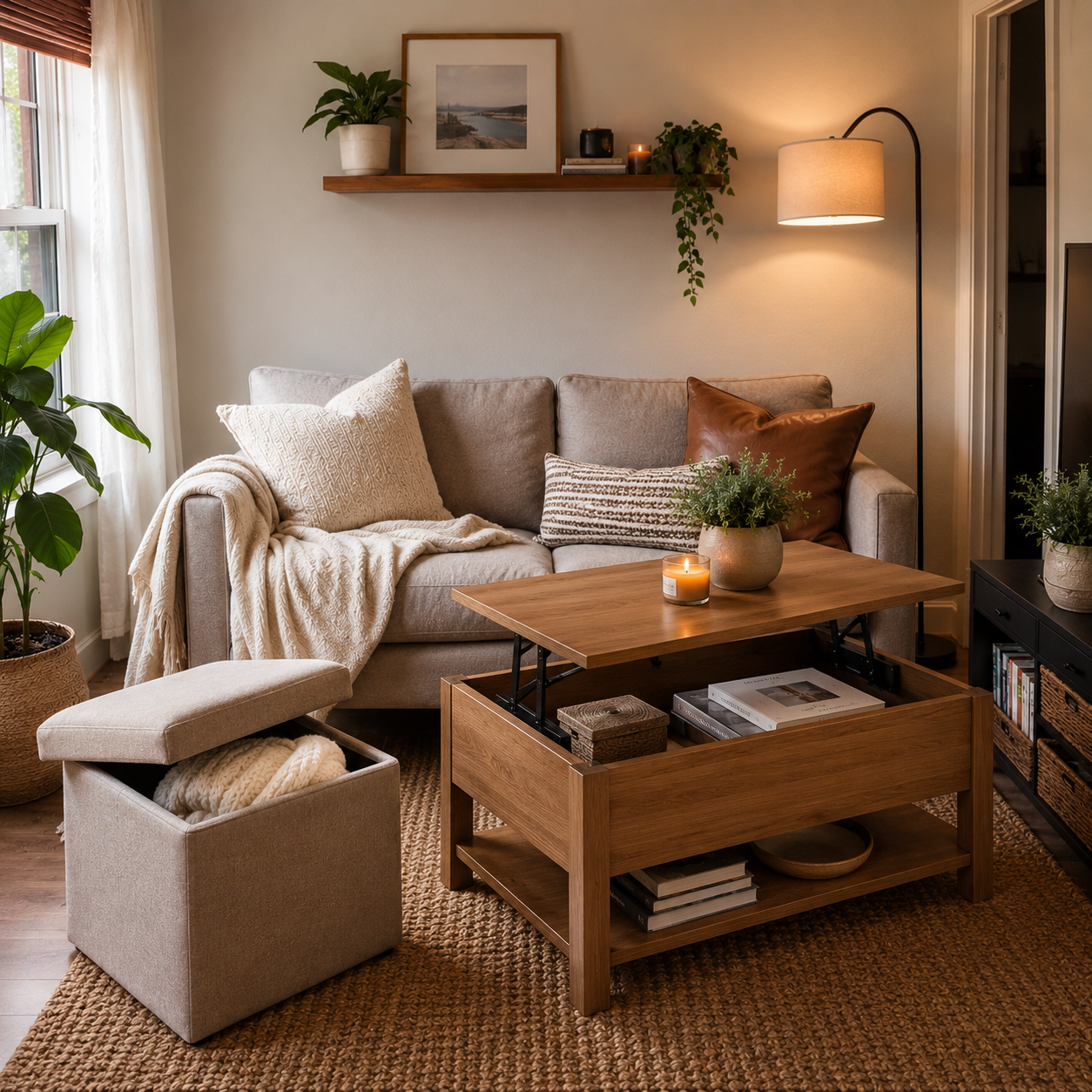
The most useful storage pieces are often the ones that replace something the room already needs.
Try this instead
Use dual-purpose pieces such as a storage ottoman, lift-top coffee table, side table with a drawer, or media console with doors. Closed storage is especially helpful for toys, chargers, blankets, remotes, and other items that create visual noise.
Match the storage to the actual problem
- Blankets: Storage ottoman or one large handled basket
- Toys: Low closed cabinet, storage ottoman, or soft lidded basket
- Remote controls: Small tray, drawer, or sofa-arm organizer
- Chargers: Cable box, charging drawer, or cord organizer
- Books and magazines: Narrow bookcase or side table with a lower shelf
Discover seven small-apartment storage spots you may be overlooking →
Two storage pieces that can replace separate furniture
Choose the option that solves the problem you actually have rather than adding storage simply because it fits.
Small Living Room Reset Checklist
You do not need to fix everything in one day. Start with this quick reset:
- Clear the main path through the room.
- Remove one piece that is unnecessary or poorly placed.
- Pull back the curtains and uncover as much glass as possible.
- Check whether the rug connects the main seating area.
- Add a lamp to one dark corner.
- Clear at least one surface completely.
- Group small decor pieces instead of scattering them.
- Give blankets, toys, remotes, and chargers a designated home.
- Measure before purchasing replacement furniture.
Frequently Asked Questions
What colors make a small living room look bigger?
Light and mid-tone colors can help reflect light, but the room does not need to be entirely white. Warm cream, soft beige, muted green, pale blue, and light greige can all work well. Keeping the color palette connected often matters more than choosing one specific shade.
Should a small living room use small furniture?
Furniture should be appropriately scaled, but not every piece needs to be miniature. One comfortable, properly measured sofa may look less cluttered than several undersized seats and tables.
How can I make a small living room look bigger without buying anything?
Open the curtains, clear the walkway, remove excess decor, rearrange the seating, move tall items away from the window, and clear the coffee table. These changes can create an immediate improvement without requiring a purchase.
Is a coffee table or an ottoman better for a small room?
It depends on how you use the room. A lift-top coffee table provides a firm surface and hidden storage, while a storage ottoman can provide seating, a footrest, and a place for blankets or toys. Choose the piece that solves the greatest number of everyday problems.
Does all the furniture need to match in a small living room?
No. The pieces do not need to come from one matching set. A room usually feels more connected when the furniture shares a few repeating qualities, such as similar wood tones, complementary colors, or clean, streamlined shapes.
Choose furniture based on the problem you need to solve
Continue to the Small-Space Furniture Guide to compare compact seating, hidden storage, narrow furniture, flexible dining solutions, and multipurpose pieces before you buy.
Explore the Small-Space Furniture Guide →